
Mixing Proof Valve
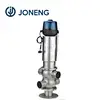
Mixing Proof Valve (also known as anti pollution valve) is a special valve with no dead angle sealing and anti cross pollution function. Through precise switching and sealing isolation of the valve core, it realizes independent transportation or switching of multiple pipeline media, and prevents residual mixing of different media in the valve body.Widely used in industries with strict hygiene requirements such as food and beverage, pharmaceuticals, dairy products, and daily chemical products, it is installed at the pipeline nodes of ingredient tanks, filling lines, and CIP cleaning systems. It is used for pipeline switching of various raw materials, finished products, or cleaning media to ensure the cleanliness and purity of the production process.
Common Types
- Double seat anti mixing valve: Double valve core and double seal design, no medium residue during switching, suitable for conveying high-purity materials
- Single seat anti mixing valve: compact structure, excellent sealing performance, suitable for medium switching in small and medium-sized pipelines
- Pneumatic anti mixing valve: Pneumatic drive, fast response speed, suitable for automated production lines
- Sanitary grade anti mixing valve: mirror polished valve body+food grade seal, in compliance with 3A/FDA sanitary standards
Structural Advantages & Corresponding Benefits
-
Mirror polished valve core structure without blind spots
- Special point: The valve core is made of 316L stainless steel and forged as a whole. The flow channel is mirror polished to Ra ≤ 0.8 μ m without any groove residue; Paired with food grade PTFE coated seal.
- Result: Completely eliminate residual media and bacterial growth, adapt to CIP online cleaning, and meet the sterile production requirements of the pharmaceutical and dairy industries.
-
Double sealed redundant leak proof structure
- Special point: Adopting a dual channel design of main seal and auxiliary seal, the sealing status is automatically detected when the valve core switches, and there is a built-in leakage alarm triggering structure.
- Result: Achieving zero leakage medium switching, effectively preventing cross contamination of different materials, and improving the safety and reliability of the production process.
All Products(18)


- 1
- 2
- 3