
The function of butterfly valve
author: 003
2026-08-17

The function of butterfly valve
Main function of butterfly valve
1. Pipeline Shutdown and Isolation: The most basic function of a butterfly valve. When the butterfly plate rotates to 0°, it completely seals the pipeline, blocking the flow of media. During equipment maintenance and pipeline CIP cleaning, closing the butterfly valve isolates upstream and downstream materials, eliminating the need to empty entire tanks of raw materials, reducing material loss, and ensuring maintenance safety. Multiple branch pipelines can be shut down individually without affecting the normal operation of the entire production line. In case of leaks or other emergencies, the media can be quickly cut off, avoiding safety hazards.
2. Regulating Media Flow: Butterfly valves have excellent throttling capabilities. The flow cross-section can be changed at any angle of the butterfly plate, precisely controlling the media flow rate and delivery volume. In food and chemical batching pipelines, material ratios can be fine-tuned; in cooling water and purified water pipelines, the process temperature can be stabilized by regulating the water flow; in dust removal and ventilation pipelines, the air volume is controlled by the butterfly valve to adapt to workshop production needs.
3. Sealed Clean Transportation: The stainless steel butterfly valve has a mirror-polished flow channel with no dead corners for material accumulation. Combined with food-grade sealing gaskets, it can withstand 121℃ steam sterilization, meeting GMP and 3A industry standards. The entire process of conveying fresh milk, pharmaceutical liquids, and fermentation broth is completely sealed to prevent contamination from external impurities. Batch switching involves thorough cleaning to remove any residue. It is often used in conjunction with sampling valves to simultaneously control material transport in the main pipeline and sample for testing, completing a comprehensive quality control system.
4. Adaptable to Various Complex Working Conditions The actuators are divided into three categories: pneumatic, electric, and manual, adaptable to different automation scenarios: Pneumatic actuators are explosion-proof, safe, and easy to maintain, and are often used in pipelines in flammable and explosive chemical workshops; Electric actuators offer precise positioning and are easy to remotely control, suitable for power plants and building automation systems; Manual actuators have a simple structure, require no external power source, and are suitable for small-diameter, low-frequency valves. Compared to hydraulic actuators, they are compact and easier to maintain daily.
2. Regulating Media Flow: Butterfly valves have excellent throttling capabilities. The flow cross-section can be changed at any angle of the butterfly plate, precisely controlling the media flow rate and delivery volume. In food and chemical batching pipelines, material ratios can be fine-tuned; in cooling water and purified water pipelines, the process temperature can be stabilized by regulating the water flow; in dust removal and ventilation pipelines, the air volume is controlled by the butterfly valve to adapt to workshop production needs.
3. Sealed Clean Transportation: The stainless steel butterfly valve has a mirror-polished flow channel with no dead corners for material accumulation. Combined with food-grade sealing gaskets, it can withstand 121℃ steam sterilization, meeting GMP and 3A industry standards. The entire process of conveying fresh milk, pharmaceutical liquids, and fermentation broth is completely sealed to prevent contamination from external impurities. Batch switching involves thorough cleaning to remove any residue. It is often used in conjunction with sampling valves to simultaneously control material transport in the main pipeline and sample for testing, completing a comprehensive quality control system.
4. Adaptable to Various Complex Working Conditions The actuators are divided into three categories: pneumatic, electric, and manual, adaptable to different automation scenarios: Pneumatic actuators are explosion-proof, safe, and easy to maintain, and are often used in pipelines in flammable and explosive chemical workshops; Electric actuators offer precise positioning and are easy to remotely control, suitable for power plants and building automation systems; Manual actuators have a simple structure, require no external power source, and are suitable for small-diameter, low-frequency valves. Compared to hydraulic actuators, they are compact and easier to maintain daily.
Difference between butterfly valves and other valves
1. Compared to ball valves: Butterfly valves are more cost-effective and occupy less space in large-diameter applications, making them more suitable for regulating large-diameter airflow and water flow.
2. Compared to tank bottom valves: Tank bottom valves are installed at the bottom of the tank for large-volume unloading; butterfly valves are installed in the middle of the pipeline and are responsible for opening and closing and regulating flow throughout the entire process.
3. Compared to gate valves: Butterfly valves open and close quickly at 90°, can regulate flow, and are compact and easy to install; gate valves are only suitable for fully opening and closing to shut off flow, cannot throttle flow, and occupy more vertical space.
2. Compared to tank bottom valves: Tank bottom valves are installed at the bottom of the tank for large-volume unloading; butterfly valves are installed in the middle of the pipeline and are responsible for opening and closing and regulating flow throughout the entire process.
3. Compared to gate valves: Butterfly valves open and close quickly at 90°, can regulate flow, and are compact and easy to install; gate valves are only suitable for fully opening and closing to shut off flow, cannot throttle flow, and occupy more vertical space.
Industry Applications
In the pharmaceutical industry, it is used for purified water pipes and fermentation tank conveying pipelines; in the food and dairy industry, it is used for fruit juice and fresh milk conveying; in the fine chemical industry, it is used for controlling the feed of reaction kettles; in the water industry, it is used for water supply and drainage and sewage treatment; in the metallurgical and steel plant industry, it is used for cooling water pipes and high-temperature flue gas pipelines; and in the HVAC industry, it is used for ventilation, dust removal ducts and air volume regulation.
Summarize
Butterfly valves have the functions of shut-off, flow regulation, and sealed conveying. They are simple in structure, quick to open and close, and easy to maintain. They can meet the needs of ordinary water supply and drainage, and can also be adapted to harsh working conditions such as sterile production and high-temperature smelting. They are highly versatile control valves in industrial fluid pipelines.
How do butterfly valves work?
Diaphragm valve usage location
Related Article

Surface treatments fall into three categories: chemical (addressing corrosion resistance), mechanical (addressing appearance), and electrochemical (addressing both). When selecting a method, first consider three factors: the required level of corrosion resistance, the strictness of cleanliness standards, and the budget.
Differences in Surface Treatment Processes for Pipe Fittings and Selection Guidelines

Stainless steel relies on an extremely thin "chromium oxide film" (passivation layer) on its surface to prevent rust; while corrosion-resistant, it is not immune to rusting forever. Rust will occur if this film is damaged, contaminated by iron particles, or exposed to overly harsh environmental conditions.
Why do stainless steel valves and pipe fittings still rust? Isn't stainless steel supposed to be "rust-proof"?
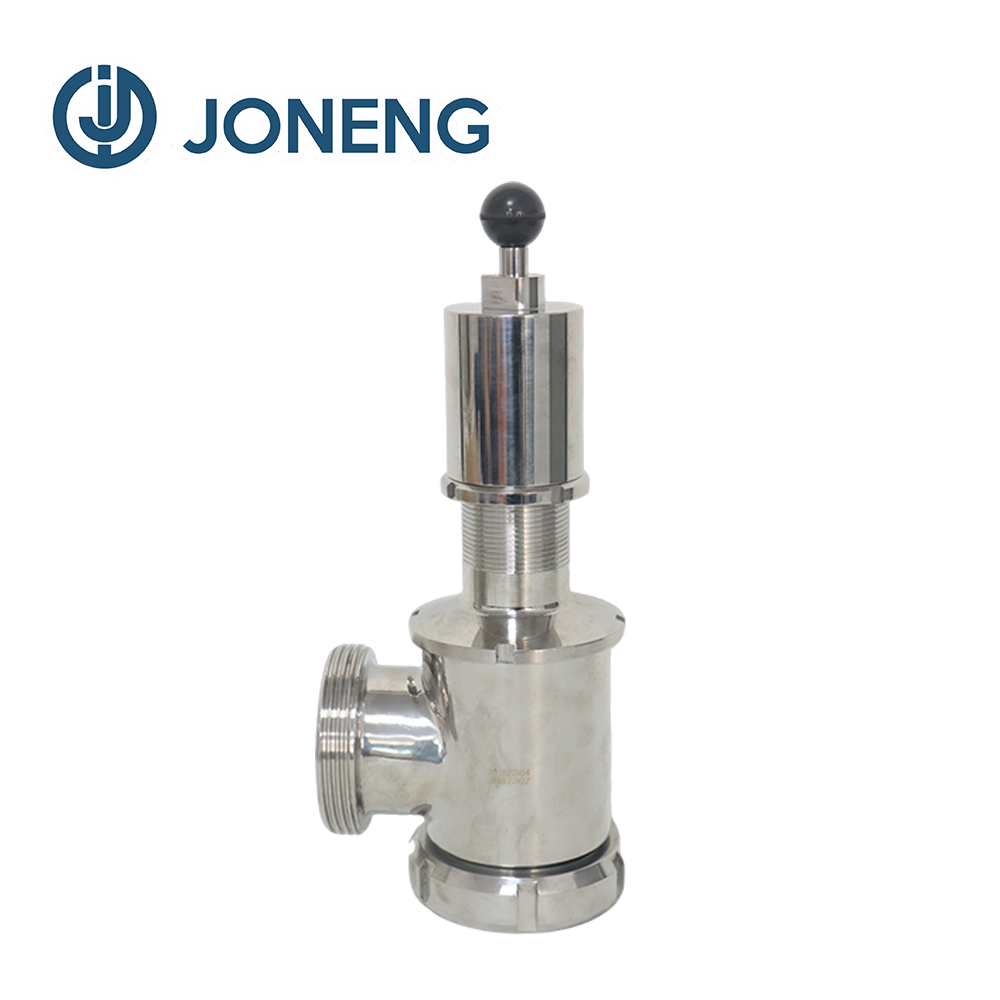
In fluid piping systems, pressure management is a crucial aspect of ensuring the reliable operation of the entire system. Safety valves and pressure reducing valves may appear similar, as both are valve components designed to manage pressure. Many novice users easily confuse the two, even using them interchangeably. However, they actually address two completely different problems: one serves the daily operation of equipment, while the other handles the risk of sudden failures.
The difference between safety valves and pressure reducing valves

Both screw pumps (single screw) and rotary lobe pumps are positive displacement pumps, primarily used for conveying high-viscosity pastes and shear-sensitive materials. They are self-priming, and their flow-through components can be made of 316L stainless steel, while seals are made of FDA-compliant EPDM or PTFE. Although their applications overlap, their structures differ, resulting in significant differences in conveying performance, maintenance methods, and material compatibility.
Screw pump vs. cam rotor pump