
Sanitary Gasket Material Selection Guide: Silicone, EPDM, FKM (Viton), PTFE — Which Service Condition Suits Each?

1. The Bottom Line First: Comparison Table of the Four Sanitary Gasket Materials
Choosing a sanitary gasket is essentially finding the intersection of three constraints — temperature, media, and sterilization method. The hard edges of the four materials are:
|
Material |
Typical forms |
Continuous working temp. |
SIP 121°C sat. steam |
SIP 134°C short-time |
Repeated-sterilization life |
|
EPDM (ethylene-propylene) |
O-ring, gasket, diaphragm, soft valve-seat |
-40°C ~ +150°C |
✓ repeatable |
✓ short-time allowed |
Good; frequent 134°C accelerates aging |
|
Silicone |
diaphragm, seat, O-ring, gasket |
-60°C ~ +200°C |
✓ repeatable |
✓ short-time allowed |
Good; best flexibility of the four |
|
FKM (Viton-type fluororubber) |
O-ring, static gasket |
-20°C ~ +200°C |
not for long-term |
✗ not recommended |
Short in wet-heat; not an SIP solution |
|
PTFE (Teflon) |
gasket, seat facing, composite diaphragm base |
-200°C ~ +260°C |
✓ stable |
✓ stable |
Excellent; but no elasticity, cold flow |
On the media side there are equally hard red lines: EPDM and silicone are damaged by oily hydrocarbons (they swell); FKM is damaged by saturated steam (wet heat accelerates aging). These two red lines trip people up more often than the temperature numbers do.
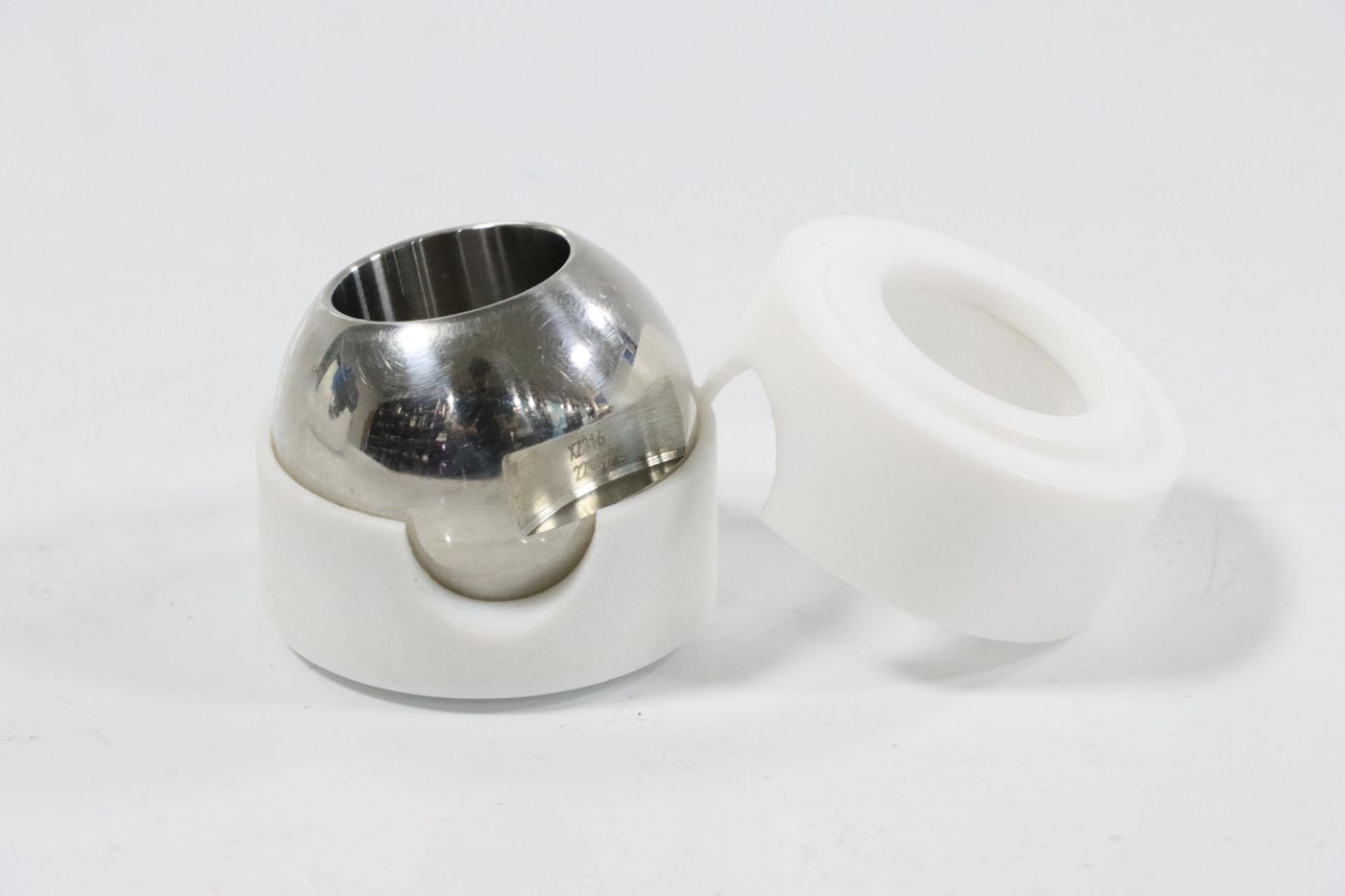
Fig. 1: PTFE-faced composite gasket — the white PTFE contact layer handles media compatibility, the elastomer backing provides the rebound
2. Selection Order: Sterilization First, Then Media, Then Temperature
Facing a duty, eliminate by this order rather than trial-and-error across all four:
- Step 1 — Does this line need repeated steam sterilization (SIP)? If yes, FKM is out immediately (short wet-heat life, not an SIP solution). The remaining choices are EPDM, silicone and PTFE. EPDM is the default answer for 121°C / 134°C repeated sterilization — just note that frequent 134°C cycles accelerate aging and shorten the change-out interval.
- Step 2 — Does the media contain oil, grease or hydrocarbons? If yes, EPDM and silicone are out at once (oily hydrocarbons cause swelling). Then look at FKM or PTFE: FKM (O-ring, static gasket) is enough for static positions; for extreme media or harsh duty use PTFE or a PTFE composite structure.
- Step 3 — Where does the temperature fall? To cover cryogenic through high heat across the board, only PTFE (-200°C ~ +260°C) qualifies; for a -60°C low-temperature duty choose silicone; for a routine line within +150°C running mostly on water-based media, EPDM gives the best overall cost.
3. The Four Materials, Each Clearly: Where It Goes, What To Avoid
EPDM (ethylene-propylene): the default for water-based and steam duties
EPDM resists hot water, steam and ozone aging, and is the widest-coverage elastomer among sanitary gaskets. For any dairy, beverage or beer line — piping, tanks, valve seals — that runs repeated hot-water CIP and steam SIP, EPDM is the first choice. Its only real weakness: mineral oil, animal/vegetable fats, and petroleum solvents make it swell — so oil- or fat-bearing duties (oily seasonings, high-fat media) must not use it.
Silicone: the workhorse for low temperature and flexible duties
Silicone has the widest continuous-temperature band of the four (-60°C ~ +200°C), holds up to repeated steam sterilization just as well, and is the most flexible — ideal for diaphragm and seat structures that must deform repeatedly. It too is damaged by oily hydrocarbons (swelling), and its tear strength is only average, so be cautious where there is high mechanical load or sharp edges.
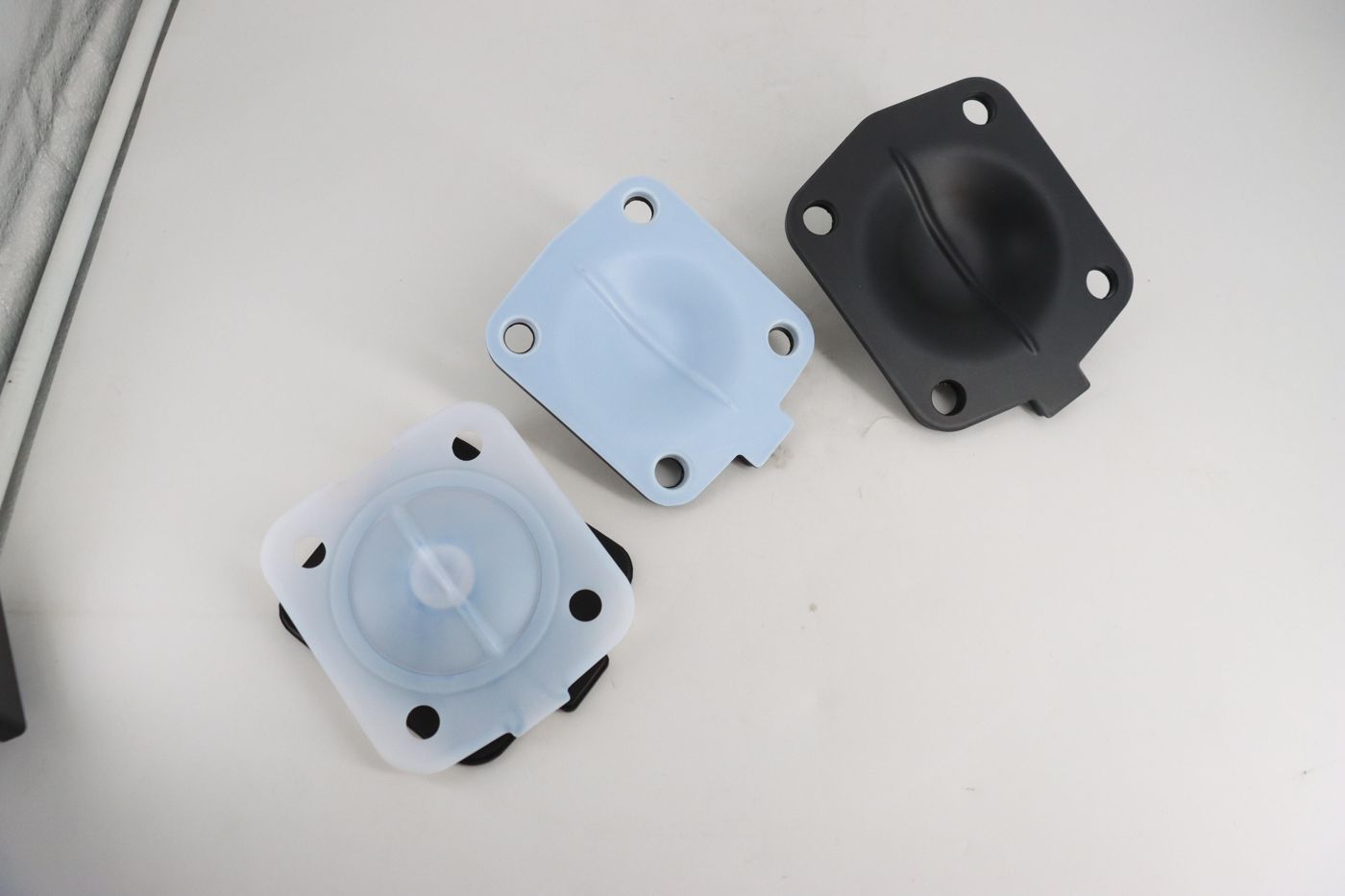
Fig. 2: The same diaphragm-valve membrane in different materials — elastomer and PTFE composite versions coexist; choose by media and sterilization
FKM (fluororubber / Viton-type): oil- and solvent-resistant, but keep it away from steam
FKM fills exactly the gap EPDM and silicone leave: resistant to oils and hydrocarbon solvents, it is the elastomer of choice for oil-bearing duties. But it is damaged by saturated steam — the molecular chain ages fast in wet heat, so repeated-SIP stations are simply not recommended. FKM's role in sanitary gaskets is therefore clear: as O-rings and static gaskets in oil-resistant sections that see no steam and no wet-heat sterilization.
PTFE (Teflon): the ceiling of media compatibility, with elasticity as the weak point
PTFE's continuous working temperature (-200°C ~ +260°C) and media compatibility are the ceiling of the four, and 121°C / 134°C steam sterilization is fully stable. But it is not an elastomer: it has no rebound, and shows cold flow (creep) — after tightening it slowly deforms, so the sealing force decays over time. So a pure-PTFE gasket suits gaskets, seat facings and composite-diaphragm bases; to get elasticity you must rely on a composite structure.
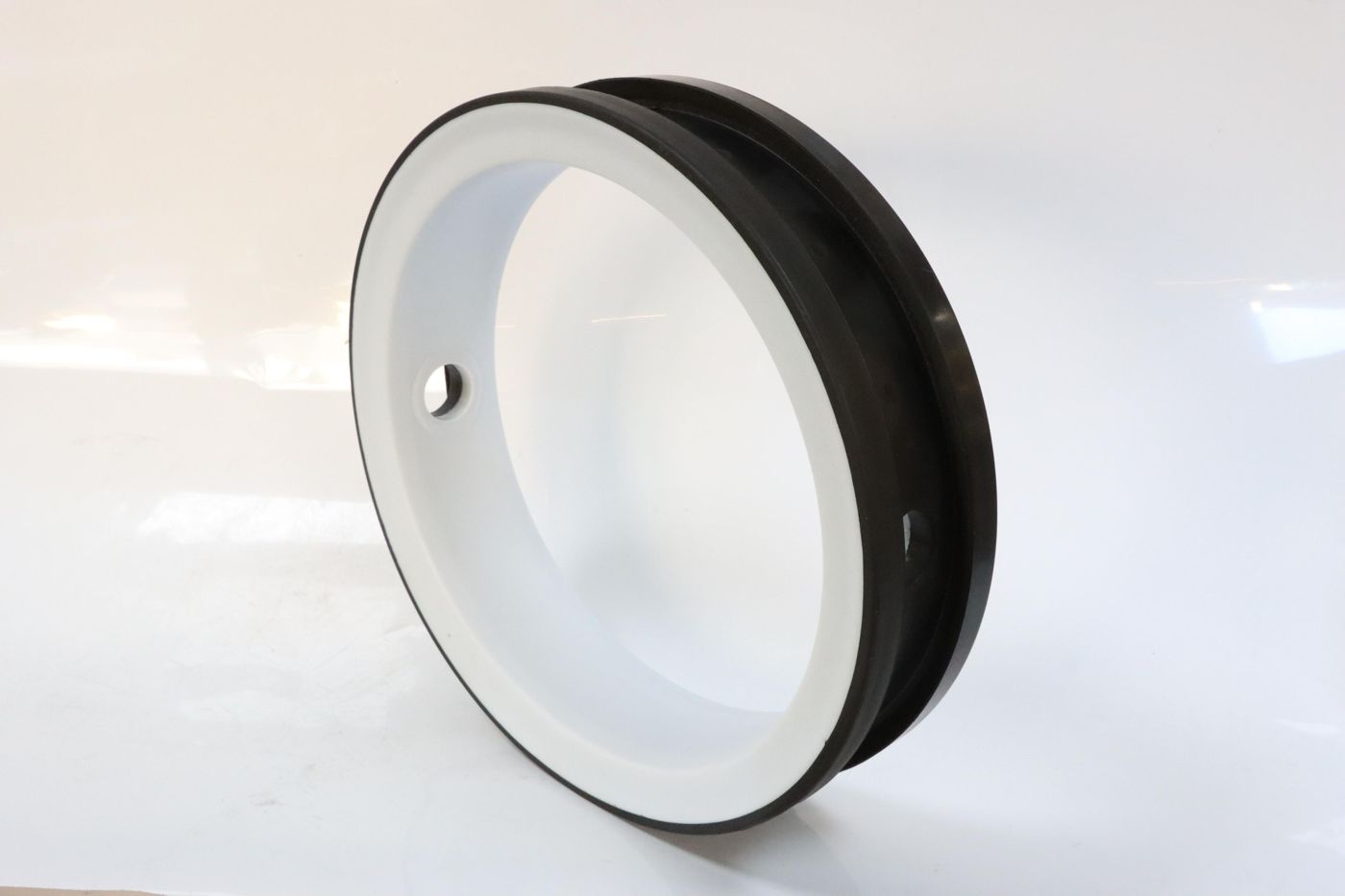
Fig. 3: PTFE fully-encapsulated ball-valve seat and ball — PTFE contacts the media, the structure solves the "no elasticity" weakness
4. The Right Way to Use PTFE: the Composite Structure
The standard engineering answer to PTFE's "no elasticity, cold flow" is to let PTFE be only the contact layer, with an elastomer as the backing: the composite gasket in Fig. 1 is a white PTFE face contacting the media, with a black elastomer backing providing the rebound; the PTFE composite diaphragm at the lower left of Fig. 2 works the same way. You get PTFE's media compatibility and sterilization stability without sacrificing sealing force. Any time you see "PTFE fully-encapsulated" or "PTFE composite", that is the idea — and it is also why the fully-encapsulated ball-valve seal (Fig. 3) can resist media and still hold a seal.
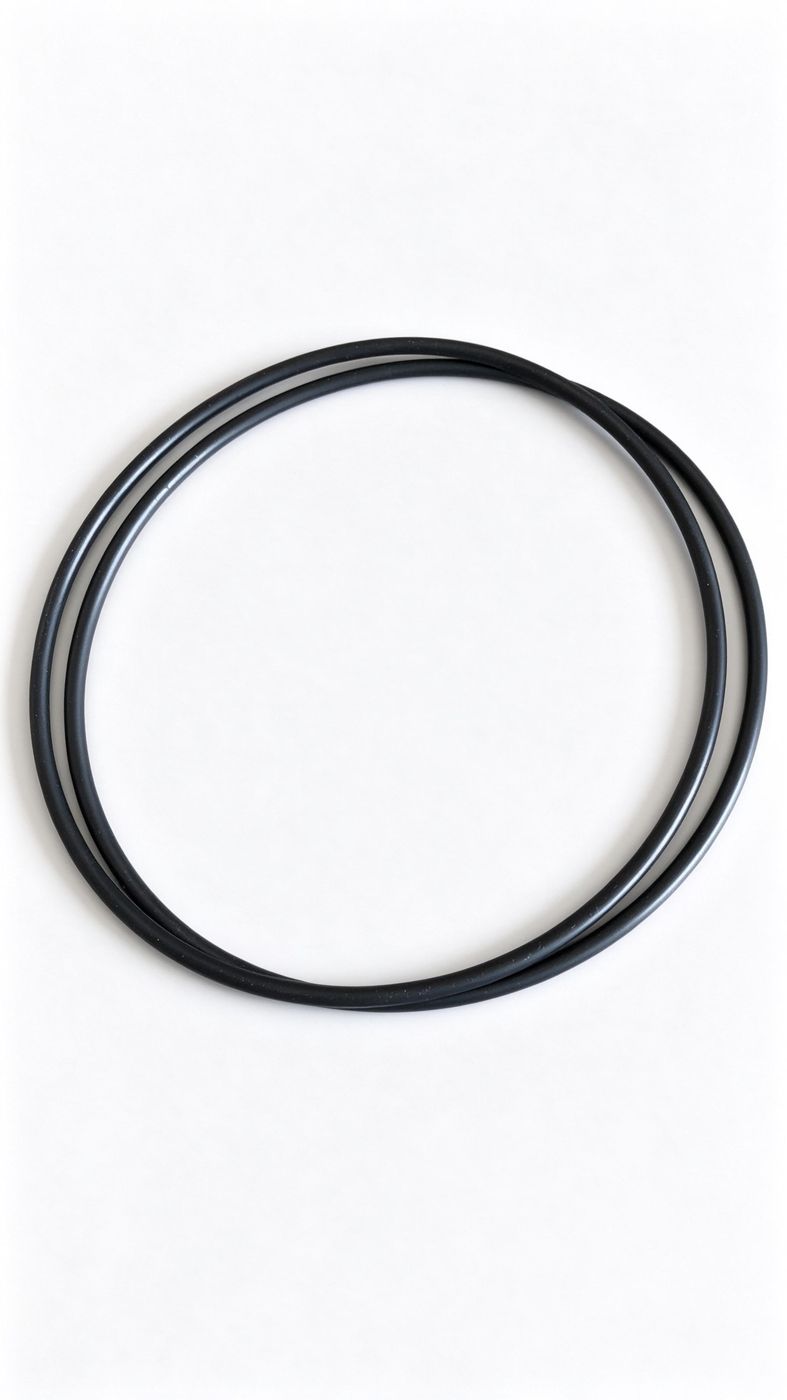
Fig. 4: O-ring — the most basic form among sanitary gaskets; all four materials have matching grades
5. Three Common Myths, with Their Conditions
- "High temperature? Just use silicone." — Does not hold. Silicone's temperature band is indeed wide, but with oily hydrocarbons in the media it still swells. Correct judgment: high temperature + oil-bearing media → look at FKM or a PTFE composite structure, not just the temperature table.
- "Viton resists everything." — Does not hold. FKM really does resist oil and solvent, but its boundary is equally clear: saturated steam and repeated SIP are not recommended. Put it on a steam-sterilized line and the gasket ages early in the wet heat.
- "PTFE has the widest range, so choose PTFE." — Holds only with conditions. Only when elasticity is solved structurally (composite backing, metal support, live-loading compression) does standalone PTFE sealing hold; using pure PTFE as a springy gasket lets cold flow bleed the sealing force over time.
Conclusion: One Order Table Is Enough
You do not need to memorize all four materials' parameters — just one elimination order: needs repeated steam sterilization → drop FKM first; media contains oily hydrocarbons → drop EPDM and silicone next; temperature crosses ±200°C or media is extreme → go straight to a PTFE composite structure. Whatever is left in the intersection is your material. For the specific form — O-ring, gasket, diaphragm or seat — confirm point by point with our engineers against your media list.
【咨询与选型】Need to match a sanitary gasket to your duty? Send us your media list, sterilization method and working temperature, and our engineers will lock the material and form to the table above. Visit the JO-NENG website for the full range of sanitary valves, pumps and fittings.
Related Reading
- Sanitary Centrifugal Pump Selection Guide: flow, head, NPSH and mechanical seal
- Sanitary Rotary Lobe Pump Selection: viscosity decides the pump type
Sanitary Butterfly Valve Selection Guide: How to Specify a Hygienic Butterfly Valve
Related Article


