
Round Bar, Plate, or Tube: Which Raw Material Makes Which Sanitary Stainless Product
1. The Raw Material Form Decides Every Process After It
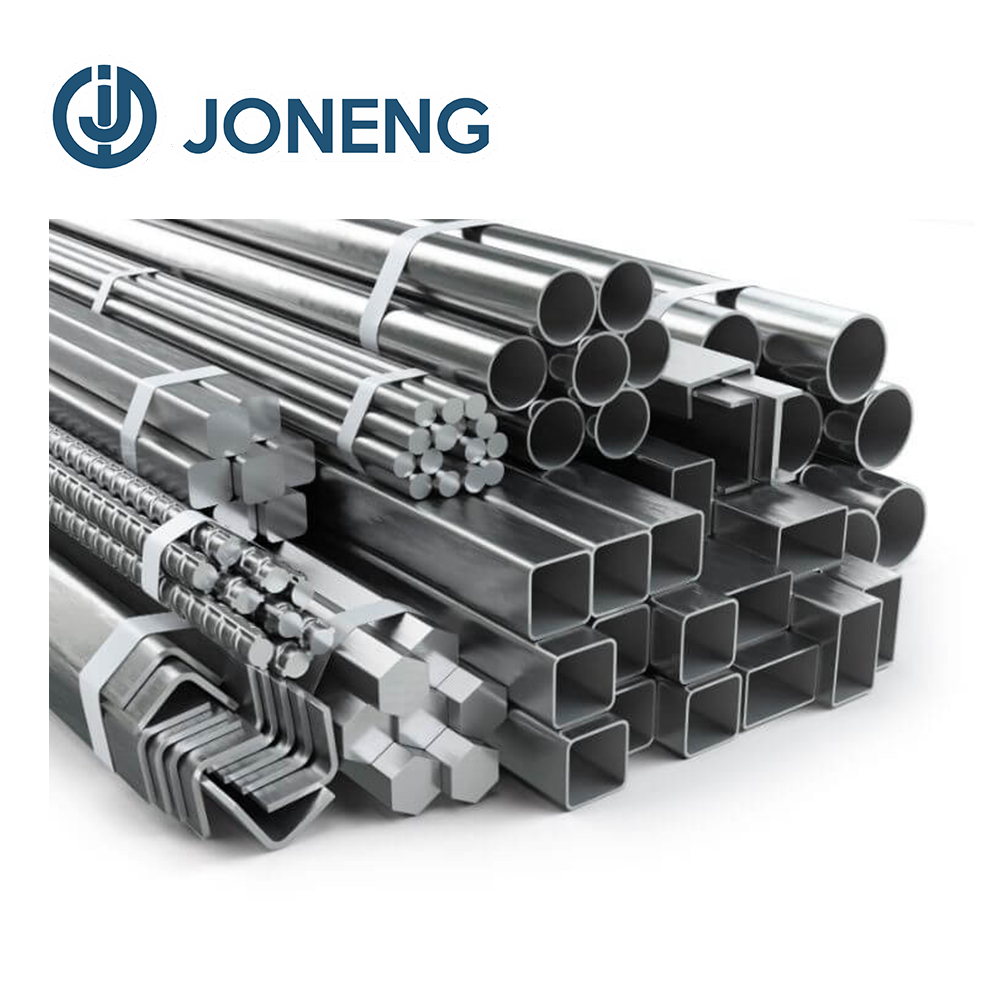
Stainless steel arrives at the workshop in only a few forms: solid bar (round bar), flat plate or coil, hollow tube, and the forged blanks and castings made from them. Choosing between them is first a question of shape feasibility, not cost — you start from whichever form is closest to the finished shape.
Round bar is solid, so its entire cross-section is machinable stock. Tube arrives with the bore already formed. Plate is flat and can only reach curved shapes by deformation, or by being rolled and welded into a cylinder. Three starting points, three entirely different sets of machines, steps, and inspections.
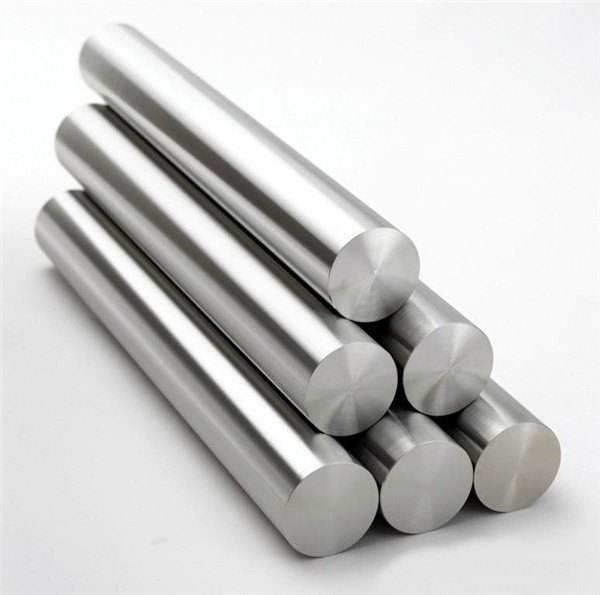
Fig. 1: Round bar — a solid starting point; the whole cross-section is machinable stock
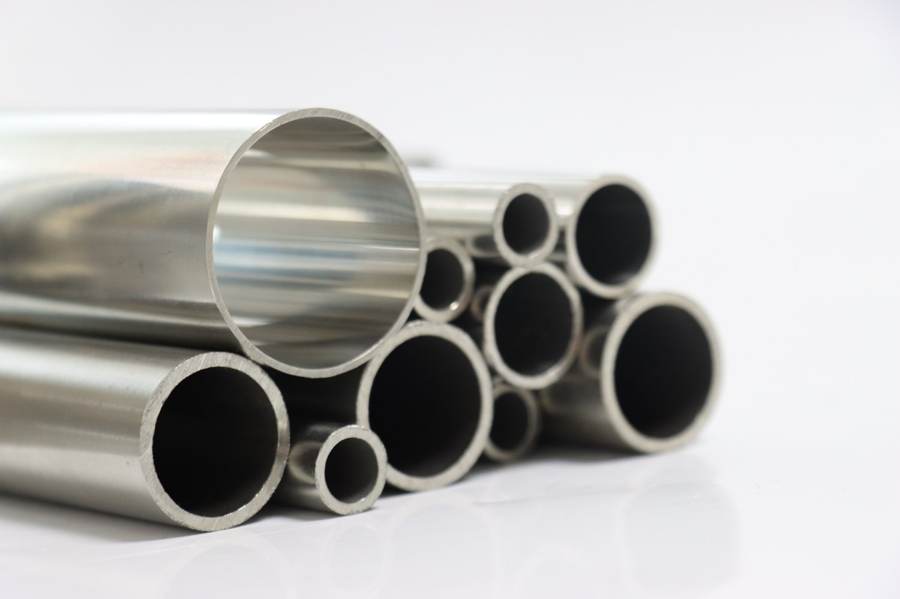
Fig. 2: Seamless tube — the hollow shape is formed at the mill
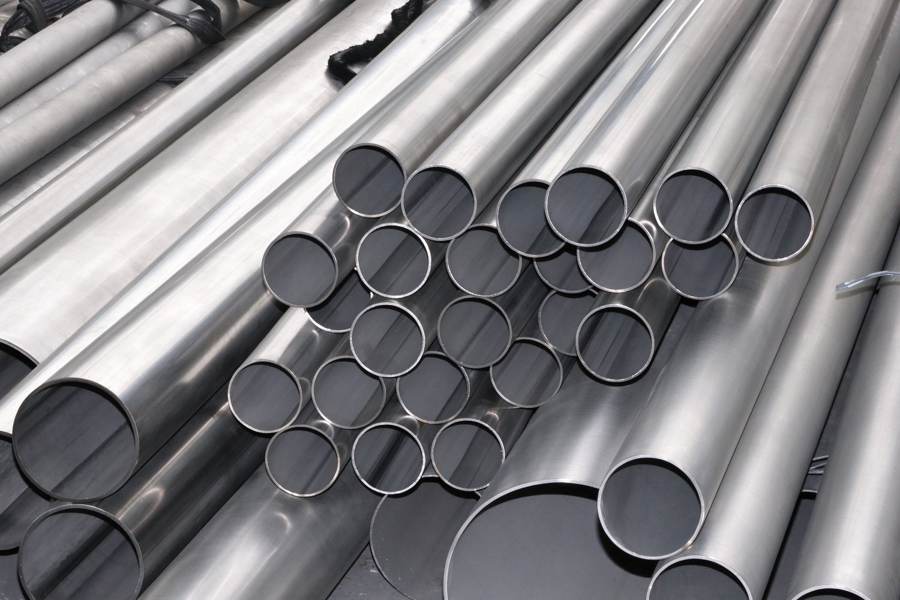
Fig. 3: Welded tube — also marked 316L, but with one longitudinal seam on the body
|
Raw material form |
Main process route |
Suitable products |
Why choose it |
|
Round bar |
Sawing → CNC turning / machining (forging first for critical parts) |
Valve bodies, stems, clamps, union nuts, flanges, blind plates, ball cores, retainer rings — solid turned parts |
Dense material, uniform in all directions; complex shapes turned in one setup |
|
Plate / coil |
Cutting → stamping / spinning / rolling → welding |
Dished ends, tank covers, manhole lids, blind plates, clamp bands, pipe supports — flat or large-curved parts |
Large diameters, thin walls, and curved surfaces can only come from plate |
|
Tube (seamless / welded) |
Cut to length → bending / pressing / expanding |
Elbows, tees, reducers, sanitary tube, sleeves, sight-glass bodies |
Hollow shape already exists: least machining, fewest welds |
|
Forged blank (bar re-forged) |
Heating → die forging → machining |
Pressure valve bodies, flanges, heavy-wall parts |
Grain flow follows the part outline; better impact and fatigue resistance |
|
Casting |
Casting → cleaning → machining |
Pump casings, impellers — complex shapes |
Complex cavities in one step, but soundness must be assessed |
One-line rule: look where the part's cavity sits. Cavity runs through the middle (pipe, elbow, tee) — start from tube. Cavity is a local pocket (valve bore, tank cover) — start from bar or plate. No cavity at all — always start from bar. This rule settles most selection arguments.
2. Round Bar: Solid Parts by Turning, Critical Parts Forged First
Round bar is the most "universal" raw material — it is solid, so in principle anything can be turned from it. The routine: saw to length, mount on a CNC lathe or machining center, and cut the profile, sealing face, threads, and internal cavity step by step. Valve bodies, clamps, union nuts, flanges, blind plates, and ball cores all take this route.
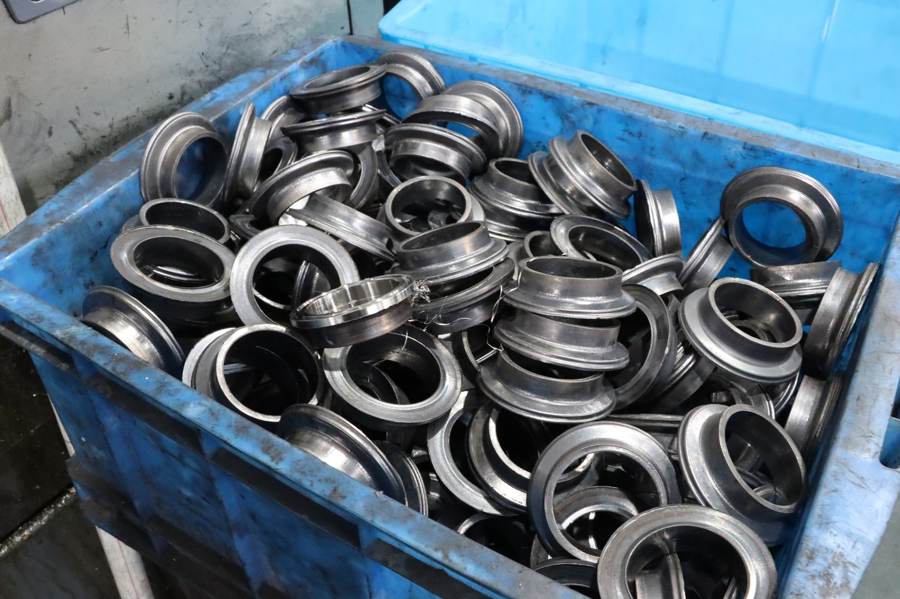
Fig. 4: The main arena of the bar route — a clamp-type part taking shape on a CNC lathe, finished pieces in the tray below
"Universal" has two costs. First, material utilization: for a part with an internal cavity, everything in the middle becomes chips — the bigger the part, the more obvious the waste. Second, cut grain flow: rolling stretches the bar's grains into axial fibers, and turning severs those fibers, weakening certain stress directions.
That is why the established practice for pressure parts is to forge first: heated bar is pressed in a die to near-net shape, so the grain flow bends around the part outline instead of being cut through; after forging, the sealing faces and threads are finish-machined. Flanges are the classic example — same grade, same size, forgings generally outperform directly-turned parts in pressure, impact, and fatigue, at the cost of one extra operation and a die.
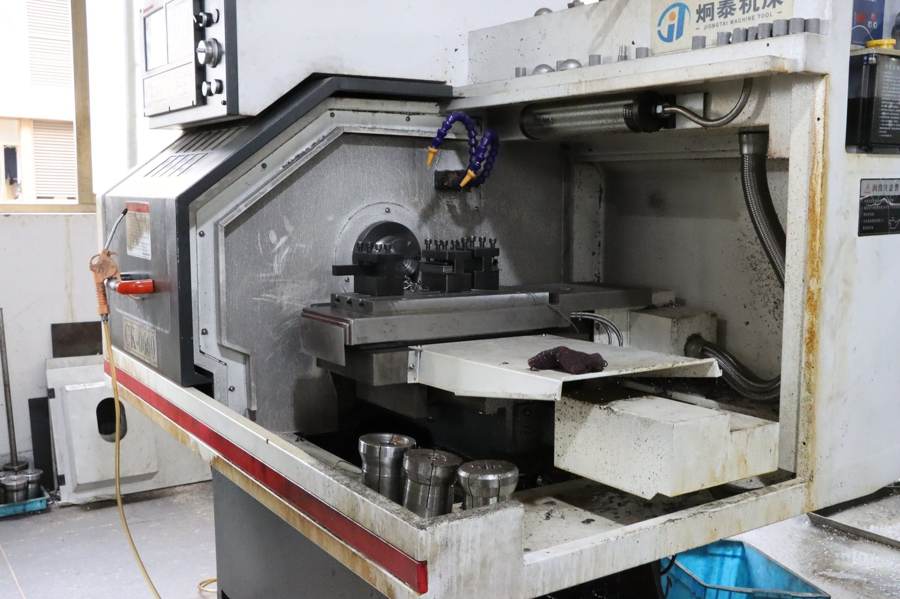
Fig. 5: Turned, not yet polished — the surface shows uniform tool marks
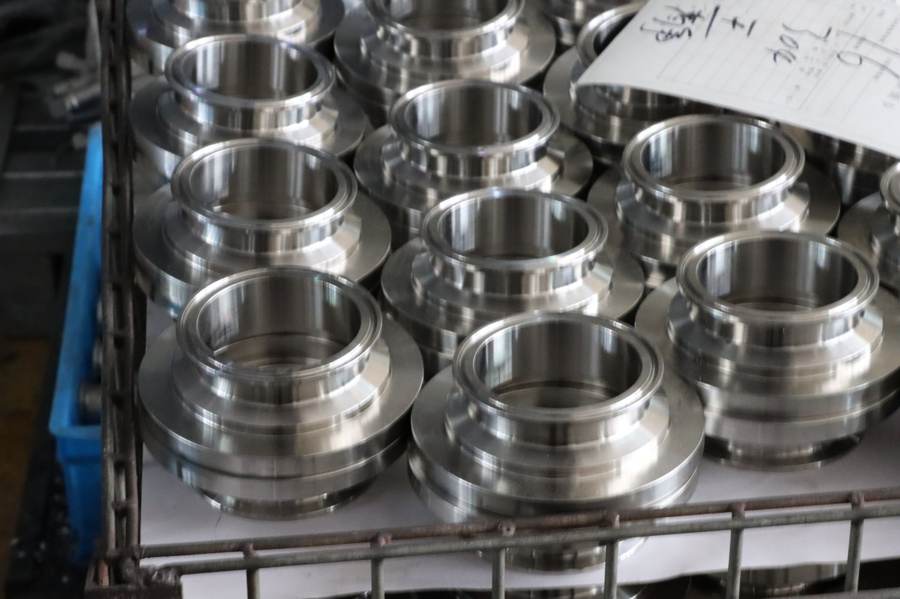
Fig. 6: The same part family as delivered — polished to mirror, a separate operation
Put Figs. 5 and 6 side by side and one thing becomes clear: "well machined" and "well finished" are two different claims. Turning controls dimensions and geometry; polishing controls roughness and cleanability. Quotations price these two operations separately — asking only "is it 316L?" never surfaces the difference.
When forging is worth paying for: parts facing pressure cycling, water hammer, or vibration, or sitting in zero-leak positions (aseptic sections, critical isolation points) — the forging's grain-flow advantage converts directly into longer service life. For static, low-pressure line accessories, turned parts are fully adequate; paying extra for forging buys nothing.
3. Plate: The Only Source for Large, Thin, Curved Parts
As soon as the diameter is too large to turn from bar, or the wall too thin to machine without wasting most of it, plate takes over. Three established routes:
- Blanking. Flat parts (blind plates, flange covers, gaskets, bracket plates) are cut directly from plate — plasma, laser, or waterjet are all common, and offcuts remain usable.
- Spinning / stamping. Dished and elliptical ends and tank covers are formed by deforming a circular blank on a spinning machine or press — which is also why a dished end of the same bore can be much thinner than a flat blind plate: the curve turns pressure into membrane stress, while a flat plate resists bending with thickness alone.
- Rolling + welding. Large-diameter shell sections, large elbows (segmented), and tank bodies are rolled from plate with one longitudinal seam.
What to watch on the plate route is the weld: rolled parts necessarily carry one longitudinal seam, which must be fully penetrated, ground, surface-treated, and inspected per the order. Seam position should also stay clear of stress concentrators and the zones of strongest product flow. One more easily missed point: a plate's surface condition is fixed at the rolling mill (hot-rolled pickled, cold-rolled annealed, or bright-annealed are different things), so part of what the polisher can achieve was decided by that plate.
4. Tube: The Easy Route for Tubular Parts — but Seamless and Welded Are Not the Same
Elbows, tees, reducers, and sanitary tube are already pipe-shaped, so tube is the natural starting point. Common forming methods:
- Bending. The tube bends around a die on a bending machine — suited to large-radius elbows; wall thinning concentrates on the outside of the bend.
- Press forming. The tube blank goes into a die and the press forms the elbow curve in one stroke — the routine method for small and mid sizes; high efficiency, with die-controlled consistency.
- Expanding / bulging. Tube ends are expanded to the required diameter for reducers and clamp-end forming.
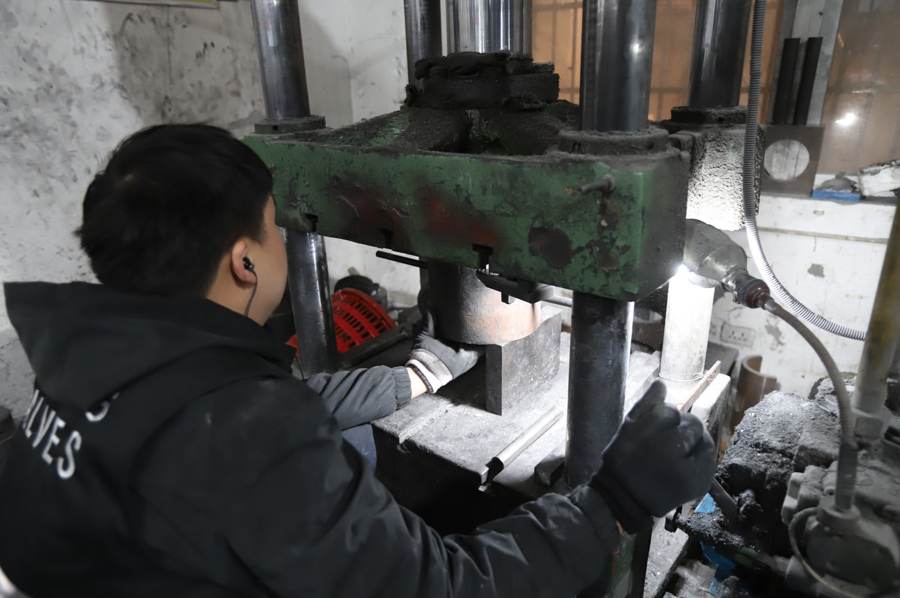
Fig. 7: The fitting press — a tube blank pressed into an elbow curve; the die guarantees shape consistency, the operator guarantees placement
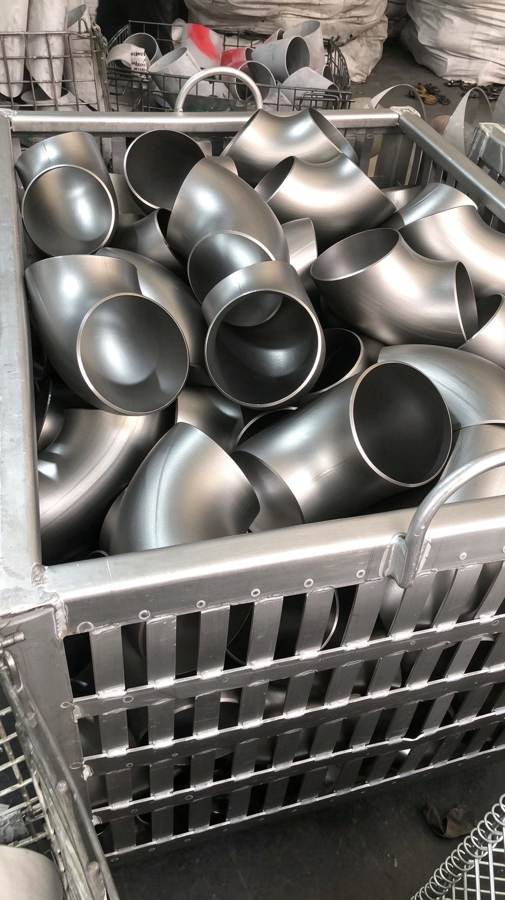
Fig. 8: Press-formed, bore-polished elbows — the mirror bore is produced piece by piece
Here is the fork that often goes unnoticed: whether the mother tube is seamless or welded (compare Figs. 2 and 3). Seamless tube has no seam at all — continuous structure, consistent pressure and fatigue behavior. Welded tube carries one longitudinal seam, which sits exactly where subsequent bending, pressing, or expanding deforms the most, demanding tighter process control. Sanitary service adds another consideration: how the weld zone behaves after polishing — polishing amplifies subtle weld-to-parent differences into visible lines. For demanding duties (aseptic sections, high pressure), the established practice is to specify seamless.
How to ask as a buyer: don't stop at "is it 316L?" — ask "is the mother tube seamless or welded, to which standard, and with a material certificate?" Parts both marked 316L can differ in price by a notch depending on tube form and standard, and in persuasiveness at audit by much more.
5. One Product, Two Routes — How to Choose
Some products can be made either way, which is exactly where price and quality diverge. Three typical cases:
|
Product |
Route A |
Route B |
How to decide |
|
Blind plate |
Sawed from bar, both faces and sealing face turned |
Cut directly from plate |
Small sizes and high sealing-face requirements: turn from bar. Large flat plates: blanking from plate is more economical. Both routes must hold the sealing-face roughness |
|
Flange |
Turned directly from bar |
Forged blank, then finish-machined |
Static low-pressure lines: turned parts suffice. Pressure cycling, vibration, or zero-leak duty: choose forgings |
|
Elbow |
Press-formed / bent from tube |
Machined solid from bar (rare) |
Standard sizes always from tube; only extra-heavy-wall or special-angle nonstandard parts justify machining from solid |
The decision always lands on one sentence: first see which raw form the shape is closest to, then weigh the cost of failure at that position. Shape sets the baseline route; failure cost decides whether to add the "insurance" — forging, seamless, higher surface class.
6. In Sanitary Service, Raw Material Must Clear Three Extra Hurdles
1. The surface starts at the raw material
Interior surface roughness is a defining sanitary metric, and it cannot be "ground in" at the end — it is bounded by the raw material's as-supplied surface. Plate has its own finish system, and sanitary tube has a dedicated standard (ASTM A270 for sanitary tubing writes surface roughness and polish grit into the order; general tube standards do not). If you order "general purpose" tube, no amount of downstream polishing will reliably deliver the batch-to-batch consistency food and pharma customers expect.
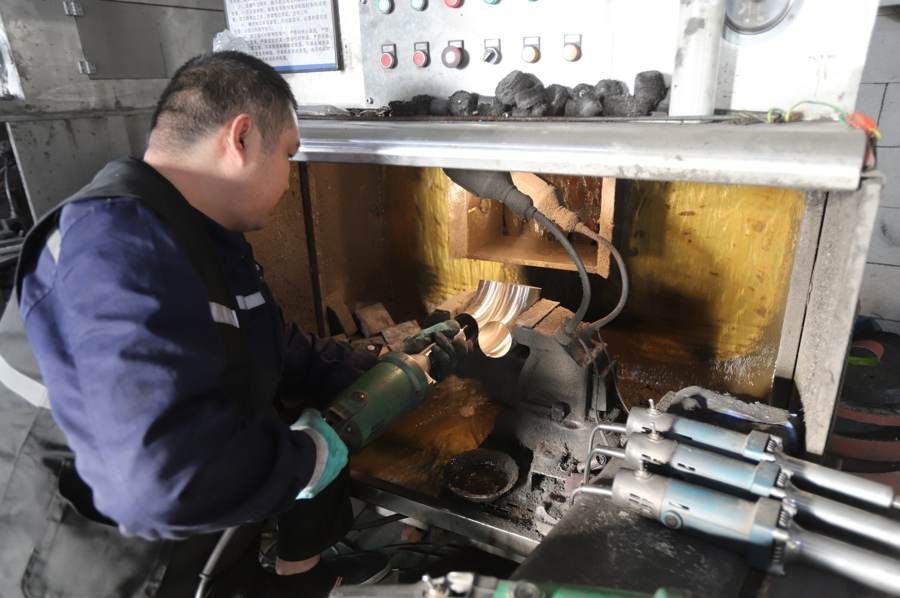
Fig. 9: The polishing station — sanitary bores are finished piece by piece with pneumatic tools, which is why two "identical" elbows can quote a grade apart
2. Count the welds and place them before you order
Hygienic design demands a continuous, drainable, cleanable interior. Every added weld is one more place to grind, inspect, and explain to an auditor. Prefer integral forming over welded assemblies; where welding is unavoidable, keep seams away from dead spots and the zones of strongest flow.
3. The material must trace back to a heat number
Food and pharma customers routinely request a material test report (MTR / EN 10204 3.1) whose heat numbers trace back to the raw material. That capability is fixed at raw-material purchase — a certificate not requested at goods-in cannot be reconstructed at goods-out. It is another reason two suppliers "both 316L" quote completely differently.
7. Four Questions to Ask Your Supplier Before Ordering
- Form and standard: Is this part made from bar, plate, or tube? To which standard is the mother material supplied (grade + standard number)?
- Any forging step: Are the pressure parts forged? Which positions are forgings, which are turned?
- Seamless or not: Is the mother tube seamless or welded? Where does the seam sit?
- Certificate and traceability: Can you provide the MTR with heat-number traceability? What certificate type?
None of these requires metallurgical training. If the supplier answers clearly and consistently, the part's lineage is basically established; vague or missing answers usually mean the supply chain itself is not managing its materials.
Not sure which process route fits your duty? Send us four things — medium, temperature/pressure range, whether the section is aseptic, and whether you need a material certificate — and we will return a raw-material route and matching component list based on the logic above. Submit your duty conditions for a manufacturing recommendation
Cleanability ultimately depends on whether material, forming method, and surface treatment all follow hygienic design principles — two identical-looking parts differ in process, and therefore in whether they pass cleaning validation.
Sanitary Gasket Material Selection Guide: Silicone, EPDM, FKM (Viton), PTFE — Which Service Condition Suits Each?
Related Article


