
Stainless steel industrial and sanitary pipe fittings: clamps, threads, welding - which is the easiest to clean?
author: 003
2026-08-24
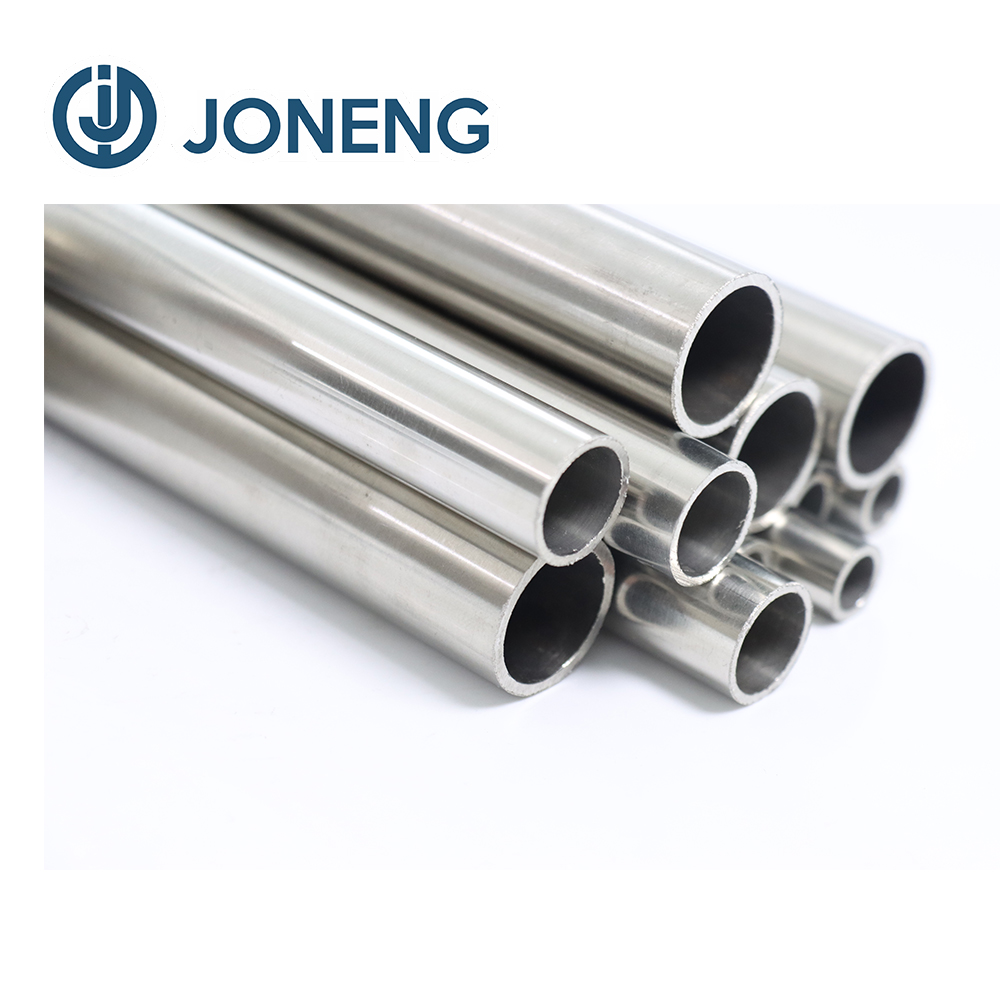
Stainless steel industrial and sanitary pipe fittings: clamps, threads, welding - which is the easiest to clean?
I. Industrial-grade scenarios: A cleaning logic centered on "easy maintenance"
Industrial applications encompass chemical engineering, water treatment, and general food processing, where pipelines primarily transport non-sterile fluids such as cooling water, acid and alkali solutions, grease, or ordinary material slurries. In this environment, the primary goal of cleaning is to remove process residues, prevent scale buildup, and facilitate unblocking, rather than pursuing "absolute sterility." The evaluation criteria for cleaning performance revolve more around operability, maintenance costs, and downtime.
Threaded Connections: Can Be Disassembled, But Not Thoroughly Cleaned
In industrial piping, threaded connections are a common choice for small-diameter, low-pressure pipelines due to their ease of disassembly and assembly/disassembly with simple tools. From a cleaning perspective, threaded fittings offer the advantage of requiring almost no specialized skills for disassembly; ordinary workers can remove the fittings using pipe wrenches and physically scrub or flush internal scale with a high-pressure water gun. However, the drawbacks of the threaded structure are equally prominent. The natural spiral-shaped narrow gaps and microgrooves formed at the interlocking of internal and external threads become a fixed habitat for residues when transporting particulate media or easily crystallizing materials. Even with disassembly and cleaning, manual scrubbing often fails to reach the root of the threads completely, and long-term accumulated scale can lead to crevice corrosion. More problematic is that the PTFE raw material tape commonly used in industrial settings is prone to aging and breakage after repeated disassembly and reassembly, with fragments mixing into the medium and causing secondary pollution. Overall, threaded connections in industrial applications fall into the category of "easy to disassemble but difficult to clean," with below-average cleaning performance.
Clamp Connections: King of Quick Disassembly, Best Cleaning Convenience
Industrial-grade clamp connections offer significant advantages in cleaning convenience. Their core value lies in the ability to disassemble within seconds without any tools, fully exposing the inside of the pipe to the operator's view. For industrial pipelines prone to scaling or requiring frequent inspection, this fully openable joint method provides immense convenience—workers can directly use wire brushes, high-pressure steam, or chemical cleaning agents to perform a full-coverage cleaning of the pipe ends and gaskets, eliminating blind spots. Furthermore, the gasket replacement cost for industrial-grade clamps is low; operators can easily replace the gasket after cleaning, completely eliminating the risk of contamination caused by gasket aging. Compared to welded pipes, clamps enable segmented cleaning and single-section pickling and passivation, significantly reducing equipment maintenance downtime. In industrial applications, clamp connections achieve the highest overall cleaning performance score.
Industrial-grade clamp connections offer significant advantages in cleaning convenience. Their core value lies in the ability to disassemble within seconds without any tools, fully exposing the inside of the pipe to the operator's view. For industrial pipelines prone to scaling or requiring frequent inspection, this fully openable joint method provides immense convenience—workers can directly use wire brushes, high-pressure steam, or chemical cleaning agents to perform a full-coverage cleaning of the pipe ends and gaskets, eliminating blind spots. Furthermore, the gasket replacement cost for industrial-grade clamps is low; operators can easily replace the gasket after cleaning, completely eliminating the risk of contamination caused by gasket aging. Compared to welded pipes, clamps enable segmented cleaning and single-section pickling and passivation, significantly reducing equipment maintenance downtime. In industrial applications, clamp connections achieve the highest overall cleaning performance score.
Welded Connections: Cleanest Inner Wall, But Most Passive to Clean
Welded connections are typically used in industrial pipelines for large-diameter main lines or high-temperature, high-pressure conditions. Their smooth, seamless inner walls result in minimal media residue and a lower tendency for scaling compared to threads and clamps—from the perspective of minimizing dirt accumulation, welding is indeed optimal. However, the problem lies in the fact that once scale or blockages develop inside welded pipes in industrial settings, cleaning becomes extremely passive. Since disassembly is impossible, cleaning relies on chemical circulation or high-pressure water jetting, methods with limited effectiveness against hardened scale. If weld beads are not ground smooth or have severe internal bulges, these localized protrusions become preferential adhesion points, making them more difficult to target than clamp joints. In industrial environments, the core requirements for cleaning are often speed and thoroughness, both of which welding lags behind.
Welded connections are typically used in industrial pipelines for large-diameter main lines or high-temperature, high-pressure conditions. Their smooth, seamless inner walls result in minimal media residue and a lower tendency for scaling compared to threads and clamps—from the perspective of minimizing dirt accumulation, welding is indeed optimal. However, the problem lies in the fact that once scale or blockages develop inside welded pipes in industrial settings, cleaning becomes extremely passive. Since disassembly is impossible, cleaning relies on chemical circulation or high-pressure water jetting, methods with limited effectiveness against hardened scale. If weld beads are not ground smooth or have severe internal bulges, these localized protrusions become preferential adhesion points, making them more difficult to target than clamp joints. In industrial environments, the core requirements for cleaning are often speed and thoroughness, both of which welding lags behind.
Industrial-grade summary: In industrial-grade scenarios, clamp connections are the easiest to clean because they can be fully opened for thorough physical intervention; although welded surfaces are smooth, cleaning is passive and costly; threads are the least clean due to structural gaps and the risk of aging of sealing materials.
II. Sanitary Grade Scenario: Cleaning Logic Centered on "Sterile and Residue-Free"
Sanitary grade applications cover high-end fields such as pharmaceutical water for injection, bioreactor piping, sterile beverages, and vaccine production. In this scenario, cleaning has evolved to the complete removal of all microorganisms and biofilms, with no blind spots allowing for bacterial regeneration. Cleaning validation methods involve endoscopic examination, ATP biofluorescence detection, and even conductivity tracking, with extremely stringent evaluation standards.
Sanitary grade applications cover high-end fields such as pharmaceutical water for injection, bioreactor piping, sterile beverages, and vaccine production. In this scenario, cleaning has evolved to the complete removal of all microorganisms and biofilms, with no blind spots allowing for bacterial regeneration. Cleaning validation methods involve endoscopic examination, ATP biofluorescence detection, and even conductivity tracking, with extremely stringent evaluation standards.
Threaded Connections: Explicitly Eliminated
In sanitary grade specifications, threaded connections are considered a violation. Both domestic and international GMP and ASME BPE standards explicitly prohibit the use of threaded connections in critical process piping. The reason is simple: the width of threaded gaps is typically between 0.1 and 0.5 mm, providing a perfect haven for microorganisms such as Pseudomonas and spores. The flushing flow rate of conventional CIP cleaning cannot remove biofilms from these gaps, and the heat from SIP online steam sterilization cannot penetrate the cold zones deep within the threads. Not to mention the potential threat to drug purity from leaching from sealing materials. In a sanitary context, threaded connections are fundamentally not "cleanable," and their cleaning performance is unusable.
In sanitary grade specifications, threaded connections are considered a violation. Both domestic and international GMP and ASME BPE standards explicitly prohibit the use of threaded connections in critical process piping. The reason is simple: the width of threaded gaps is typically between 0.1 and 0.5 mm, providing a perfect haven for microorganisms such as Pseudomonas and spores. The flushing flow rate of conventional CIP cleaning cannot remove biofilms from these gaps, and the heat from SIP online steam sterilization cannot penetrate the cold zones deep within the threads. Not to mention the potential threat to drug purity from leaching from sealing materials. In a sanitary context, threaded connections are fundamentally not "cleanable," and their cleaning performance is unusable.
Clamp connections: Good cleanability, but with structural compromises.
Sanitary clamps are widely used in the pharmaceutical and food industries for equipment interfaces, hose connections, and instrument points requiring regular calibration. Their optimized sanitary connector faces significantly reduce liquid accumulation grooves, and the gaskets use FDA-compliant modified PTFE or silicone rubber with smooth surfaces and resistance to repeated sterilization. In terms of cleanliness, the core advantage of clamps lies in their removability, allowing gaskets and connector faces to undergo offline sterilization or ultrasonic cleaning, which is especially important after handling high-viscosity liquids. However, it must be acknowledged that clamps always have a physical weakness—the micron-level compression gap between the gasket and connector face, which can become a biofilm initiation point after long-term operation. Therefore, clamps are not the first choice for fixed pipelines that do not require frequent disassembly and reassembly.
Sanitary clamps are widely used in the pharmaceutical and food industries for equipment interfaces, hose connections, and instrument points requiring regular calibration. Their optimized sanitary connector faces significantly reduce liquid accumulation grooves, and the gaskets use FDA-compliant modified PTFE or silicone rubber with smooth surfaces and resistance to repeated sterilization. In terms of cleanliness, the core advantage of clamps lies in their removability, allowing gaskets and connector faces to undergo offline sterilization or ultrasonic cleaning, which is especially important after handling high-viscosity liquids. However, it must be acknowledged that clamps always have a physical weakness—the micron-level compression gap between the gasket and connector face, which can become a biofilm initiation point after long-term operation. Therefore, clamps are not the first choice for fixed pipelines that do not require frequent disassembly and reassembly.
Welded connections: The absolute gold standard. Automated rail welding is widely recognized as the champion of sanitary cleanliness. Its core lies in completely eliminating all mechanical connection interfaces—the pipes are fused into a continuous, integrated metal structure, and the inner wall roughness can be polished to Ra≤0.4μm, making it difficult for bacteria to adhere. More importantly, welding eliminates any gaskets, threads, or grooves, allowing CIP cleaning fluid to flow freely at high speeds and turbulently, while SIP pure steam can penetrate and heat evenly, eliminating cold spot residue. In the cleaning validation phase, welded pipes easily pass riboflavin tests or swab sampling tests, ensuring a sterility level far superior to other methods. Although once a weld becomes contaminated, it must be cut and replaced, the standardized CIP/SIP procedures are sufficient to guarantee cleanliness under normal operating conditions. Overall, welding is the easiest method to clean in sanitary environments.
Final Assessment:
The two scenarios have drastically different definitions of "cleanliness," leading to a complete reversal of the evaluation ranking: in industrial-grade applications, clamps are the best, followed by welding, and threads are the worst; in sanitary-grade applications, welding is the best, followed by clamps, and threads are prohibited. When selecting components for engineering projects, it is essential to first clearly define the applicable scenario and then choose the connection solution with the best cleaning performance accordingly.
What are the differences in pressure rating between industrial-grade and sanitary-grade stainless steel flanges?
What are the key design features of stainless steel butterfly valves?
Related Article

"Send us a 2-inch valve." Sounds simple — until the DIN line, the ISO line and the American line all turn out to have different outside diameters. Here is the comparison table our engineers use every day, and the five rules that prevent 90% of sanitary connection mistakes.
Sanitary Tube and Valve Standards Compared: DIN 11850, ISO 2037, SMS 3008, BS 4825 and ASME BPE

In hygienic plants, seals — not valve bodies — cause over 80% of valve service issues, and most of them announce themselves weeks in advance. This guide walks through the symptoms our service engineers meet most often, what each one really means, and the maintenance rhythm that keeps AB valves leak-free for years.
Sanitary AB Valve Troubleshooting: Leakage, Seal Failure and Sticking — Causes, Fixes and a Maintenance Schedule

Surface treatments fall into three categories: chemical (addressing corrosion resistance), mechanical (addressing appearance), and electrochemical (addressing both). When selecting a method, first consider three factors: the required level of corrosion resistance, the strictness of cleanliness standards, and the budget.
Differences in Surface Treatment Processes for Pipe Fittings and Selection Guidelines

Stainless steel relies on an extremely thin "chromium oxide film" (passivation layer) on its surface to prevent rust; while corrosion-resistant, it is not immune to rusting forever. Rust will occur if this film is damaged, contaminated by iron particles, or exposed to overly harsh environmental conditions.
Why do stainless steel valves and pipe fittings still rust? Isn't stainless steel supposed to be "rust-proof"?