
How to avoid leakage and scale buildup during the installation of sanitary pipe fittings for pure water equipment?
author: 003
2026-08-13

How to avoid leakage and scale buildup during the installation of sanitary pipe fittings for pure water equipment?
Optimize pipe fitting materials to suit pure water conditions, reducing scale buildup and corrosion from the source.
Pure and ultrapure water media are free of impurities but have extremely high permeability. Ordinary inferior pipe fittings are prone to scaling, rusting, and impurity precipitation. No matter how standardized the installation process, substandard materials will eventually lead to failure. Ordinary carbon steel and inferior stainless steel pipe fittings are strictly prohibited in pure water equipment; high-cleanliness, hygienic materials must be selected. For conventional pure water systems, 304 stainless steel sanitary pipe fittings are preferred. They are suitable for ordinary reverse osmosis pure water delivery, are rust-proof, corrosion-resistant, and do not easily scale, meeting conventional water standards.
For ultrapure water, pharmaceutical purified water, and electronic high-purity water systems, 316L stainless steel pipe fittings must be upgraded. 316L material contains molybdenum, resists chloride ion corrosion, does not leach metal ions, and has better surface passivation, making it less prone to oxide layer formation and scale adhesion. At the same time, the surface roughness of the inner and outer surfaces of the pipe fittings must be ≤0.8μm. Mirror polishing significantly reduces the adhesion between water and the pipe wall, making it difficult for scale and biofilm to adhere and accumulate, thus effectively preventing scale buildup from the material level.
For ultrapure water, pharmaceutical purified water, and electronic high-purity water systems, 316L stainless steel pipe fittings must be upgraded. 316L material contains molybdenum, resists chloride ion corrosion, does not leach metal ions, and has better surface passivation, making it less prone to oxide layer formation and scale adhesion. At the same time, the surface roughness of the inner and outer surfaces of the pipe fittings must be ≤0.8μm. Mirror polishing significantly reduces the adhesion between water and the pipe wall, making it difficult for scale and biofilm to adhere and accumulate, thus effectively preventing scale buildup from the material level.
Standardize the selection and installation of sealing components to completely eliminate interface leakage.
Over 90% of leaks in pure water pipelines originate from incorrect gasket selection or improper installation. Pure water systems operate under long-term circulation and frequent pressure fluctuations, placing extremely high demands on the sealing performance, water resistance, and aging resistance of gaskets. Ordinary rubber gaskets are prone to aging, deformation, leakage, and scale buildup.
For both pure and ultrapure water applications, food-grade EPDM or PTFE gaskets are universally recommended. These are water-resistant, aging-resistant, do not leach, and do not mold, making them suitable for long-term pure water circulation. When installing gaskets, ensure they are intact, free from deformation, scratches, and gaps. The use of aged, hardened, or cracked old gaskets is strictly prohibited. Simultaneously, ensure the clamps are tightened evenly, with both ends aligned and centered to avoid uneven tension and loosening due to pipeline vibration. Improper gasket usage, such as mixing or under-installing gaskets, is strictly prohibited.
For both pure and ultrapure water applications, food-grade EPDM or PTFE gaskets are universally recommended. These are water-resistant, aging-resistant, do not leach, and do not mold, making them suitable for long-term pure water circulation. When installing gaskets, ensure they are intact, free from deformation, scratches, and gaps. The use of aged, hardened, or cracked old gaskets is strictly prohibited. Simultaneously, ensure the clamps are tightened evenly, with both ends aligned and centered to avoid uneven tension and loosening due to pipeline vibration. Improper gasket usage, such as mixing or under-installing gaskets, is strictly prohibited.
Standardized pipe layout avoids stubborn scale buildup caused by water accumulation in dead corners.
The biggest threat to pure water systems is stagnant water. Stagnant water in corners and crevices is a major cause of scale buildup, biofilm growth, and excessive bacteria. Many seemingly smooth pipework systems, due to improper layout, create blind pipes, dead corners, and low-lying areas where pure water stagnates, slowly breeding scale and microorganisms.
Pipe installation must follow the principle of slope-following, maintaining a reasonable slope and avoiding horizontal depressions or localized subsidence to ensure no residual water remains in the pipes after shutdown. All branch pipes and diversion pipes should be as short as possible, reducing the number of blind pipes. The length of blind pipes must strictly adhere to industry standards to prevent stagnant water accumulation. At the same time, the pipe layout should be as simple and neat as possible, reducing unnecessary bends and joints. Fewer pipe splices reduce the risk of leaks and scale buildup. For end points prone to water accumulation, drain valves and empty valves can be added to periodically drain residual water and completely eliminate stagnant water and scale buildup.
Pipe installation must follow the principle of slope-following, maintaining a reasonable slope and avoiding horizontal depressions or localized subsidence to ensure no residual water remains in the pipes after shutdown. All branch pipes and diversion pipes should be as short as possible, reducing the number of blind pipes. The length of blind pipes must strictly adhere to industry standards to prevent stagnant water accumulation. At the same time, the pipe layout should be as simple and neat as possible, reducing unnecessary bends and joints. Fewer pipe splices reduce the risk of leaks and scale buildup. For end points prone to water accumulation, drain valves and empty valves can be added to periodically drain residual water and completely eliminate stagnant water and scale buildup.
Strictly control the splicing and welding processes of pipe fittings to eliminate hidden leaks and rough surfaces.
Sanitary pipe fittings for pure water equipment come in two connection methods: quick-connect and welded. Substandard workmanship can lead to hidden safety hazards. Quick-connect fittings must be installed with smooth, burr-free, and deformation-free pipe ends. Misalignment can cause poor sealing and minor leaks, which can lead to scale buildup at the joints over time, making them difficult to clean.
Welded pipes must be welded using a sterile, automated argon arc welding process with nitrogen purging throughout to prevent oxidation and blackening of the weld. Improper welding can result in pinholes and incomplete welds, causing micro-leaks. Rough welds and oxidized peeling can create uneven surfaces that easily attract impurities from the water, gradually forming stubborn scale that cannot be removed by conventional cleaning, becoming a permanent hygiene hazard. After installation, each pipe must be pressure tested for leaks to identify and prevent micro-leaks from occurring later.
Welded pipes must be welded using a sterile, automated argon arc welding process with nitrogen purging throughout to prevent oxidation and blackening of the weld. Improper welding can result in pinholes and incomplete welds, causing micro-leaks. Rough welds and oxidized peeling can create uneven surfaces that easily attract impurities from the water, gradually forming stubborn scale that cannot be removed by conventional cleaning, becoming a permanent hygiene hazard. After installation, each pipe must be pressure tested for leaks to identify and prevent micro-leaks from occurring later.
Proper cleaning and passivation after installation are essential to prevent initial scale buildup.
Many new projects directly connect to water supply after equipment installation, neglecting pipe cleaning and passivation. This results in welding slag, dust, and metal oxide residue remaining in the pipes, which quickly solidify into scale after water flow, causing initial water quality to fail to meet standards.
After pipe installation, a complete process of pipe flushing, acid washing, passivation, and disinfection must be performed to thoroughly remove impurities, welding residues, and loose metal from the pipe walls, allowing a dense passivation layer to form, enhancing resistance to scaling and corrosion. During the initial water flow, continuous circulation flushing is necessary until the water quality stabilizes and is free of impurities before formal production commences, preventing initial scale buildup problems from the outset.
After pipe installation, a complete process of pipe flushing, acid washing, passivation, and disinfection must be performed to thoroughly remove impurities, welding residues, and loose metal from the pipe walls, allowing a dense passivation layer to form, enhancing resistance to scaling and corrosion. During the initial water flow, continuous circulation flushing is necessary until the water quality stabilizes and is free of impurities before formal production commences, preventing initial scale buildup problems from the outset.
Summarize
To effectively prevent leaks and scale buildup in sanitary pipe fittings for pure water equipment, the key lies in "material compatibility, compliant sealing, seamless layout, standardized processes, and post-treatment pre-cleaning." Leaks are solved through standardized sealing and installation processes, while scale buildup is prevented through seamless layout, high-cleanliness materials, and standardized post-treatment. When installing equipment and modifying pipelines, companies should not only focus on the main equipment configuration but also pay attention to the details of pipe fitting installation. Standardized pipe fitting construction processes can effectively ensure the long-term stability of pure water system quality, reduce downtime due to malfunctions, pipeline cleaning, and parts replacement costs, and achieve long-term stable and compliant operation of the equipment.
What are the key design features of stainless steel butterfly valves?
When purchasing sanitary-grade sight glasses accessories, what are the key considerations regarding glass material and structural selection?
Related Article

Surface treatments fall into three categories: chemical (addressing corrosion resistance), mechanical (addressing appearance), and electrochemical (addressing both). When selecting a method, first consider three factors: the required level of corrosion resistance, the strictness of cleanliness standards, and the budget.
Differences in Surface Treatment Processes for Pipe Fittings and Selection Guidelines

Stainless steel relies on an extremely thin "chromium oxide film" (passivation layer) on its surface to prevent rust; while corrosion-resistant, it is not immune to rusting forever. Rust will occur if this film is damaged, contaminated by iron particles, or exposed to overly harsh environmental conditions.
Why do stainless steel valves and pipe fittings still rust? Isn't stainless steel supposed to be "rust-proof"?
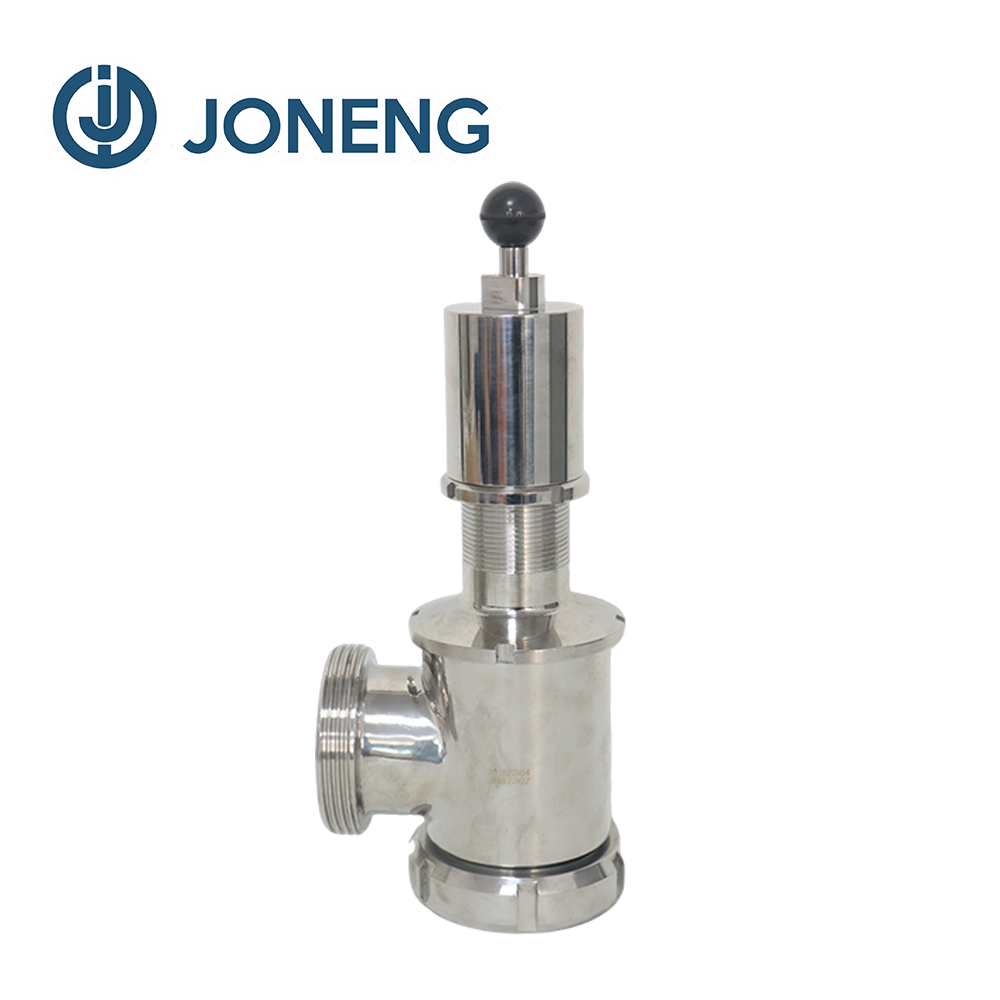
In fluid piping systems, pressure management is a crucial aspect of ensuring the reliable operation of the entire system. Safety valves and pressure reducing valves may appear similar, as both are valve components designed to manage pressure. Many novice users easily confuse the two, even using them interchangeably. However, they actually address two completely different problems: one serves the daily operation of equipment, while the other handles the risk of sudden failures.
The difference between safety valves and pressure reducing valves

Both screw pumps (single screw) and rotary lobe pumps are positive displacement pumps, primarily used for conveying high-viscosity pastes and shear-sensitive materials. They are self-priming, and their flow-through components can be made of 316L stainless steel, while seals are made of FDA-compliant EPDM or PTFE. Although their applications overlap, their structures differ, resulting in significant differences in conveying performance, maintenance methods, and material compatibility.
Screw pump vs. cam rotor pump