
What is the working principle of an emulsifying pump?
author: 003
2026-08-05

What is the working principle of an emulsifying pump?
Pump body dissection: two core components
An emulsifying pump mainly consists of two parts: a drive system and a working chamber. These two parts work together to complete the emulsification process.
The upper drive unit: Serving as the power source, it typically uses a motor to directly drive the rotor at high speed, converting electrical energy into mechanical energy to provide continuous power for the emulsification process.
The lower working chamber: This is the area where the material is actually processed. It is usually made of 304 or 316L stainless steel, with its inner walls precision polished to reduce residue and meet hygiene requirements, ensuring the material flows in a clean environment.
Core components: Stator and rotor system. The stator and rotor are the core working units of the emulsifying pump. The rotor rotates at high speed, while the stator remains stationary, creating a very small gap between them.
When the material passes through this gap, it is subjected to strong shearing, compression, and friction. Large droplets are rapidly torn into tiny particles, and the mixture continuously redistributes and mixes, thus forming a stable emulsion system.
The upper drive unit: Serving as the power source, it typically uses a motor to directly drive the rotor at high speed, converting electrical energy into mechanical energy to provide continuous power for the emulsification process.
The lower working chamber: This is the area where the material is actually processed. It is usually made of 304 or 316L stainless steel, with its inner walls precision polished to reduce residue and meet hygiene requirements, ensuring the material flows in a clean environment.
Core components: Stator and rotor system. The stator and rotor are the core working units of the emulsifying pump. The rotor rotates at high speed, while the stator remains stationary, creating a very small gap between them.
When the material passes through this gap, it is subjected to strong shearing, compression, and friction. Large droplets are rapidly torn into tiny particles, and the mixture continuously redistributes and mixes, thus forming a stable emulsion system.
Working principle analysis: High-speed shear emulsification mechanism
When the motor drives the rotor to rotate at high speed, material is continuously drawn into the gap between the stator and rotor, undergoing intense shearing, impact, and turbulence forces within a very short time.
During this high-speed motion, droplets are continuously broken down and refined, while violent collisions and mixing occur, rapidly reducing the particle size of the dispersed phase.
Simultaneously, a locally circulating region of strong turbulence forms within the system, causing the material to pass through the shear zone multiple times, thereby further improving the emulsification uniformity and stability.
During this high-speed motion, droplets are continuously broken down and refined, while violent collisions and mixing occur, rapidly reducing the particle size of the dispersed phase.
Simultaneously, a locally circulating region of strong turbulence forms within the system, causing the material to pass through the shear zone multiple times, thereby further improving the emulsification uniformity and stability.
Work process analysis
① Feeding Stage: Material enters the pump body under external pressure or self-priming and is conveyed to the stator and rotor working area.
② Shearing and Emulsification Stage: High-speed rotation generates strong shearing and impact forces, rapidly breaking up and uniformly dispersing the droplets.
③ Discharge Stage: The homogeneous material, after multiple processing steps, is continuously discharged from the outlet, forming a stable emulsion product.
② Shearing and Emulsification Stage: High-speed rotation generates strong shearing and impact forces, rapidly breaking up and uniformly dispersing the droplets.
③ Discharge Stage: The homogeneous material, after multiple processing steps, is continuously discharged from the outlet, forming a stable emulsion product.
Features and Application Advantages
Emulsifying pumps are characterized by high emulsification efficiency, fine particle size, good uniformity, and strong continuous production capability. Their structure is mostly made of sanitary-grade stainless steel, facilitating cleaning and meeting the stringent cleanliness requirements of the food and pharmaceutical industries.
They are also suitable for processing high-viscosity materials and multiphase systems, playing a vital role in the production of daily chemical emulsions, beverages, and pharmaceuticals.
Through a high-speed rotating stator and rotor structure, emulsifying pumps convert mechanical energy into strong shear energy and turbulent energy, enabling immiscible liquids to complete the breakup, dispersion, and homogenization process in a very short time, ultimately forming a stable emulsion system. They are essential equipment for modern industrial emulsification and homogenization processes.
They are also suitable for processing high-viscosity materials and multiphase systems, playing a vital role in the production of daily chemical emulsions, beverages, and pharmaceuticals.
Through a high-speed rotating stator and rotor structure, emulsifying pumps convert mechanical energy into strong shear energy and turbulent energy, enabling immiscible liquids to complete the breakup, dispersion, and homogenization process in a very short time, ultimately forming a stable emulsion system. They are essential equipment for modern industrial emulsification and homogenization processes.
When purchasing sanitary-grade sight glasses accessories, what are the key considerations regarding glass material and structural selection?
How do butterfly valves work?
Related Article

Surface treatments fall into three categories: chemical (addressing corrosion resistance), mechanical (addressing appearance), and electrochemical (addressing both). When selecting a method, first consider three factors: the required level of corrosion resistance, the strictness of cleanliness standards, and the budget.
Differences in Surface Treatment Processes for Pipe Fittings and Selection Guidelines

Stainless steel relies on an extremely thin "chromium oxide film" (passivation layer) on its surface to prevent rust; while corrosion-resistant, it is not immune to rusting forever. Rust will occur if this film is damaged, contaminated by iron particles, or exposed to overly harsh environmental conditions.
Why do stainless steel valves and pipe fittings still rust? Isn't stainless steel supposed to be "rust-proof"?
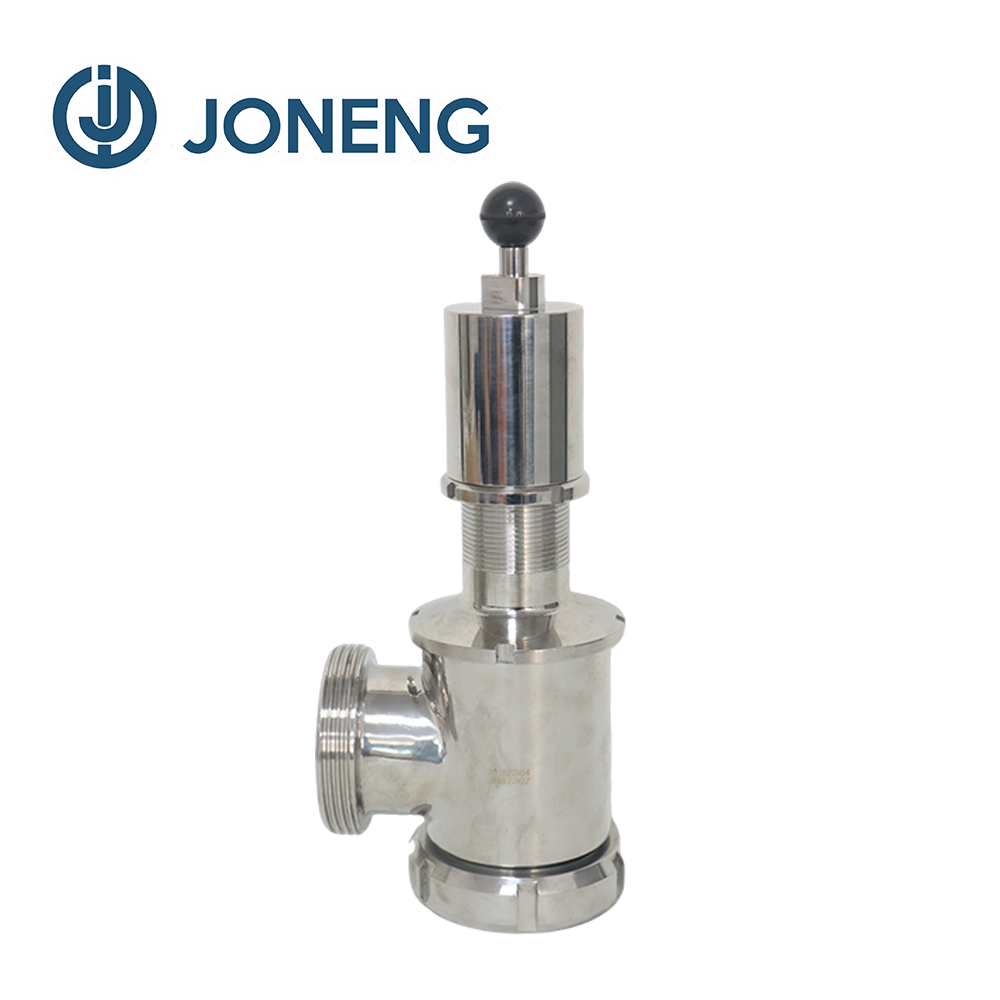
In fluid piping systems, pressure management is a crucial aspect of ensuring the reliable operation of the entire system. Safety valves and pressure reducing valves may appear similar, as both are valve components designed to manage pressure. Many novice users easily confuse the two, even using them interchangeably. However, they actually address two completely different problems: one serves the daily operation of equipment, while the other handles the risk of sudden failures.
The difference between safety valves and pressure reducing valves

Both screw pumps (single screw) and rotary lobe pumps are positive displacement pumps, primarily used for conveying high-viscosity pastes and shear-sensitive materials. They are self-priming, and their flow-through components can be made of 316L stainless steel, while seals are made of FDA-compliant EPDM or PTFE. Although their applications overlap, their structures differ, resulting in significant differences in conveying performance, maintenance methods, and material compatibility.
Screw pump vs. cam rotor pump