
How to Choose Between Concentric and Eccentric Types of Sanitary Reducing Fittings?
author: 003
2026-07-08
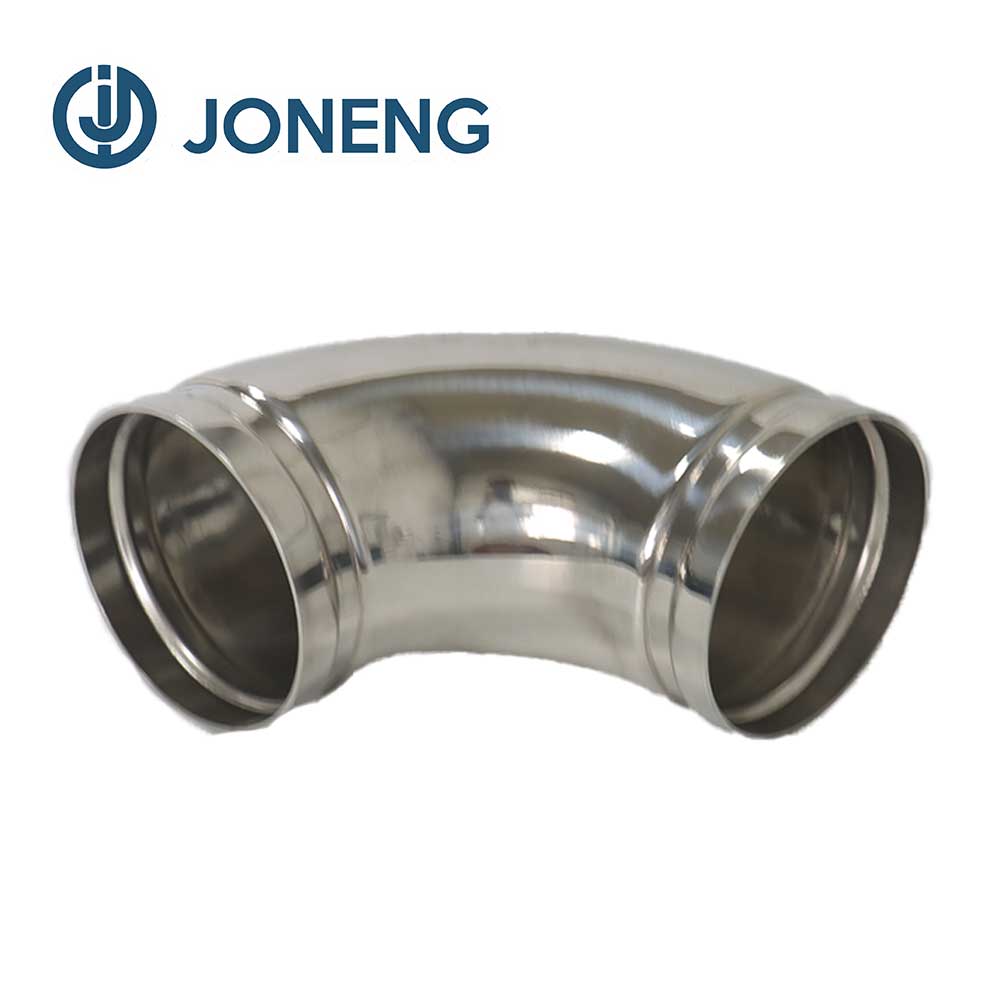
How to Choose Between Concentric and Eccentric Types of Sanitary Reducing Fittings?
In clean piping systems for food and beverage, pharmaceutical purified water, biological agents, and fine chemicals, sanitary reducing fittings are core components for pipe diameter changes, equipment connections, and flow regulation. They are mainly used for transitioning between large and small pipe diameters, adapting to the dimensions of pumps, valves, tank interfaces, and filtration equipment.
Sanitary reducing fittings are mainly divided into two types: concentric and eccentric. They have high similarity in appearance and similar prices, leading many purchasing and engineering personnel to arbitrarily use interchangeable types. However, in aseptic cleanroom conditions, the flow channel structure, liquid accumulation effect, and venting capacity of the two types of reducing fittings are completely different. Incorrect selection can easily lead to problems such as stagnant water accumulation in the pipeline, residual materials, bacterial growth, air resistance, pump cavitation, and incomplete drainage, directly affecting the cleanliness of the production line and the stability of equipment. This article, based on cleanroom operating procedures, breaks down the structural differences, applicable operating conditions, selection standards, and installation points of the two types of reducing fittings to help companies accurately select the right type and avoid aseptic risks.
I. Basic Structural Differences: Understanding the Core Differences Between Two Reducer Fittings
To accurately select the right reducer, it's essential to understand its fundamental structural differences, which are the basis for adapting to different operating conditions. Concentric reducer fittings have their ends aligned on the same center line, forming a symmetrical conical structure. The pipe diameter shrinks uniformly and transitions centrally, resulting in a regular and symmetrical flow channel without any height deviation. Overall, the pressure is evenly distributed, and the shape is centrally aligned.
Eccentric reducer fittings have offset ends. One side of the pipe wall remains straight, while the other side slopes and shrinks, creating a height difference structure. This asymmetrical design keeps the bottom or top of the pipe horizontal, eliminating low-lying dead zones and preventing air pockets. It specifically addresses industry pain points such as liquid accumulation, air accumulation, and incomplete drainage in cleanroom pipelines. Both fittings use 304/316L stainless steel with a mirror-polished finish, meeting the requirements for CIP online cleaning and SIP high-temperature sterilization. The differences lie only in the flow channel structure and installation adaptation scenarios.
II. Applicable Operating Conditions and Advantages of Sanitary Concentric Reducers Concentric reducers, with their symmetrical centering, stable flow path, and balanced pressure, are ideal for vertical pipelines, pressure-stabilized delivery, and applications without dead zones in wastewater discharge. They are the sole preferred choice for vertical pipeline reducers in cleanrooms.
Firstly, concentric reducers are the preferred choice for all vertical riser pipelines. In food and pharmaceutical workshops, concentric reducers ensure uniform vertical flow of the medium, stable flow rate, and uniform pressure loss, preventing flow deviation and turbulence. They are suitable for conveying various clean media such as pure water, pharmaceutical solutions, beverages, and fermentation broths. Vertical pipelines do not have horizontal depressions or water accumulation issues, eliminating the need for eccentric leveling structures. The symmetrical structure of concentric reducers actually improves the overall stability and aesthetics of the pipeline.
Secondly, concentric reducers are suitable for high-pressure, high-speed, and pressure-stabilized delivery conditions. High-flow-rate main pipelines, high-pressure sterilization pipelines, and pure water circulation main pipelines require high pipeline pressure stability. Concentric reducers offer a uniform diameter transition, preventing localized eddies and pressure surges. This effectively protects downstream valves, instruments, and pumps, preventing pressure fluctuations from impacting production stability.
Finally, concentric reducers are suitable for vertical equipment docking scenarios. For vertical tank tops, vertical filters, and vertical valve assembly docking, using concentric reducers ensures centered alignment of interfaces, uniform stress distribution, and stable sealing. This avoids pipeline stress deformation and interface leakage caused by eccentric misalignment, ensuring long-term stable operation.
III. Applicable Operating Conditions and Core Value of Sanitary Eccentric Reducers
Eccentric reducers are specialized fittings for horizontal pipelines in cleanrooms, preventing liquid accumulation, cavitation, and thorough wastewater discharge. They are also key components that many aseptic workshops mistakenly choose, fundamentally addressing the blind spots and hidden dangers that concentric reducers cannot avoid.
Eccentric reducers are specialized fittings for horizontal pipelines in cleanrooms, preventing liquid accumulation, cavitation, and thorough wastewater discharge. They are also key components that many aseptic workshops mistakenly choose, fundamentally addressing the blind spots and hidden dangers that concentric reducers cannot avoid.
First, horizontal transport pipelines must use eccentric reducers. If a concentric reducer is used in a horizontal pipeline, a natural low-lying dead zone will form at the bottom. After shutdown, stagnant water and residual material will easily accumulate, making complete drainage impossible. This leads to the long-term growth of biofilm and bacteria, disrupting the sterile environment. An eccentric reducer, on the other hand, can be installed with a flat top or bottom as needed, completely eliminating low-lying water accumulation areas, ensuring a smooth pipeline throughout, and allowing for complete drainage of residual liquid after shutdown. It eliminates sanitary dead zones and is suitable for conveying perishable media such as beverages, dairy products, and pharmaceuticals.
Secondly, an eccentric reducer is essential for the pump inlet suction line. Concentric reducers are strictly prohibited from being used at the inlet of centrifugal pumps and sanitary rotor pumps. A concentric reducer will form an air pocket at the top, accumulating air and causing pump cavitation, excessive noise, unstable flow, and pump failure. An eccentric reducer with a flat top allows for continuous venting, preventing air accumulation, ensuring a stable and full feed to the pump, protecting core pump components, and extending equipment lifespan.
Thirdly, it is suitable for operating conditions requiring complete drainage and a high level of hygiene. In pharmaceutical GMP workshops, aseptic preparations, high-end pure water systems, and fermentation clean piping, zero tolerance for residual liquid is paramount. Eccentric reducers ensure zero liquid accumulation and residue in the piping, adapting to high-frequency CIP cleaning and sterilization conditions, guaranteeing continuous compliance with workshop cleanliness standards.
IV. Industry-Standardized Selection Rules for Quick and Accurate Judgment
Based on general construction specifications in the food and pharmaceutical cleanroom industry, a simple and efficient selection formula has been summarized to facilitate rapid implementation by purchasing and engineering personnel: Concentric reducers for vertical piping, eccentric reducers for horizontal piping; concentric reducers for high-pressure stabilization, eccentric reducers for venting and sterilization; concentric reducers for vertical equipment, eccentric reducers for pump-feeding.
Based on general construction specifications in the food and pharmaceutical cleanroom industry, a simple and efficient selection formula has been summarized to facilitate rapid implementation by purchasing and engineering personnel: Concentric reducers for vertical piping, eccentric reducers for horizontal piping; concentric reducers for high-pressure stabilization, eccentric reducers for venting and sterilization; concentric reducers for vertical equipment, eccentric reducers for pump-feeding.
Further details are provided for special operating conditions: For viscous media, media containing trace particles, and easily sedimenting materials, eccentric reducers are uniformly used in horizontal sections to prevent material accumulation; for high-frequency sterilization and high-cleanliness aseptic piping, eccentric reducers are prioritized to minimize sanitary dead zones; for ordinary low-pressure, normal-temperature, and low-requirement auxiliary piping, concentric reducers can be used as needed to control costs.
V. Key Points for Selection and Installation to Avoid Hidden Dangers
Many pipeline failures are not due to incorrect selection, but rather to improper installation. Eccentric reducer installations must be performed according to direction: pump inlet pipes should be installed horizontally at the top to prevent air accumulation and cavitation; sewage and drainage pipes should be installed horizontally at the bottom to ensure thorough drainage of residual liquid. Reversing the direction will directly lead to air and water accumulation, achieving the opposite of the desired effect.
Furthermore, arbitrary substitution and mixing are prohibited. Concentric reducers should never be used in horizontal pipelines. While they may seem trouble-free in the short term, they will create stubborn sanitary dead zones in the long term, leading to water quality exceeding standards and material contamination. Material standards must be standardized during procurement: 316L material is suitable for aseptic pharmaceutical environments, while 304 material is suitable for general food processing environments. Internal and external polishing roughness should be ≤0.8μm to ensure no burrs, easy cleaning, and compatibility with the overall clean pipeline standards.
Summary
In conclusion, there is no inherent superiority of one over the other between sanitary concentric and eccentric reducers; the only difference lies in their suitability for different operating conditions. Concentric reducers are primarily designed for vertical pipelines, high-pressure stabilization, and vertical connection scenarios, ensuring stable flow and uniform pipeline pressure. Eccentric reducers are primarily designed for horizontal pipelines, pump suction, and aseptic venting scenarios, effectively addressing issues such as liquid and gas accumulation and sanitary dead zones. When designing pipelines and procuring fittings, companies strictly adhere to pipeline routing, equipment location, and hygiene standards.
In conclusion, there is no inherent superiority of one over the other between sanitary concentric and eccentric reducers; the only difference lies in their suitability for different operating conditions. Concentric reducers are primarily designed for vertical pipelines, high-pressure stabilization, and vertical connection scenarios, ensuring stable flow and uniform pipeline pressure. Eccentric reducers are primarily designed for horizontal pipelines, pump suction, and aseptic venting scenarios, effectively addressing issues such as liquid and gas accumulation and sanitary dead zones. When designing pipelines and procuring fittings, companies strictly adhere to pipeline routing, equipment location, and hygiene standards.
What are the key considerations for selecting the glass material and structure when procuring sanitary sight glass accessories?
Essential reading for purchasing pipeline seals: 3 important reference conditions for gasket selection.
Related Article

The sanitary butterfly valve is the most-specified valve in any hygienic plant — cheap, compact, fast and easy to clean. It is also the valve most often mis-specified, which is why a unit that "looked fine on paper" starts leaking after one CIP season. This guide covers the seven decisions that determine whether your butterfly valve holds up: seat material, connection and standard, actuation, torque sizing, finish and maintenance.
Sanitary Butterfly Valve Selection Guide: How to Specify a Hygienic Butterfly Valve

"Send us a 2-inch valve." Sounds simple — until the DIN line, the ISO line and the American line all turn out to have different outside diameters. Here is the comparison table our engineers use every day, and the five rules that prevent 90% of sanitary connection mistakes.
Sanitary Tube and Valve Standards Compared: DIN 11850, ISO 2037, SMS 3008, BS 4825 and ASME BPE

In hygienic plants, seals — not valve bodies — cause over 80% of valve service issues, and most of them announce themselves weeks in advance. This guide walks through the symptoms our service engineers meet most often, what each one really means, and the maintenance rhythm that keeps AB valves leak-free for years.
Sanitary AB Valve Troubleshooting: Leakage, Seal Failure and Sticking — Causes, Fixes and a Maintenance Schedule

Surface treatments fall into three categories: chemical (addressing corrosion resistance), mechanical (addressing appearance), and electrochemical (addressing both). When selecting a method, first consider three factors: the required level of corrosion resistance, the strictness of cleanliness standards, and the budget.
Differences in Surface Treatment Processes for Pipe Fittings and Selection Guidelines