
A must-read for ball valve buyers!
author: 001
2026-02-28
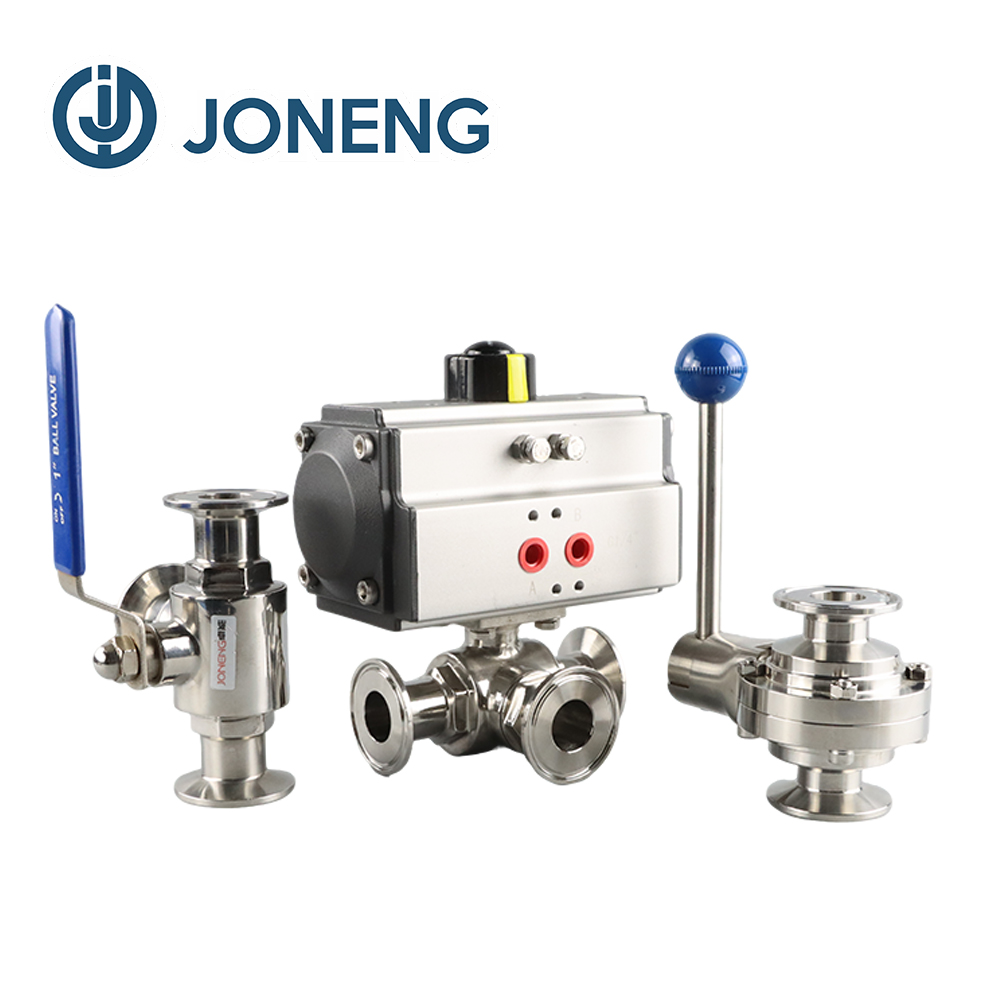
A must-read for ball valve buyers!
Ball valves are the most widely used fluid control components in industrial pipeline systems, covering multiple fields such as water treatment, petrochemicals, food and pharmaceuticals, municipal engineering, and gas transmission. According to Google search data, there are over one million ball valve-related searches globally each year, with overseas buyers and engineers showing a high concentration of core questions.
Many buyers are often troubled by various issues when selecting ball valves for projects—they can't distinguish ball valves from other valves, don't know which material to choose, are unsure if they are suitable for their operating conditions, and may even make purchasing errors due to misunderstandings of ball valve functions, leading to problems such as valve jamming, leakage, and short lifespan, increasing maintenance costs and downtime losses.
Unlike complex technical explanations, today we'll break down the answers to the top 10 most searched ball valve questions on Google globally from a practical purchasing perspective. We'll tailor our approach to the actual needs of overseas buyers, avoiding technical parameters and wordplay, making it easy for even novice buyers to understand, helping you avoid selection pitfalls and accurately meet your needs.
This explanation is completely aligned with actual purchasing scenarios, addressing the most likely problems you'll encounter in selection and use. After reading, you can directly apply it to your projects.
I. Basic Understanding: What is a Ball Valve? How Does It Work?
This is the most frequently asked basic question by global buyers, especially suitable for novice purchasers new to ball valves. In fact, the core structure and working principle of a ball valve are quite simple and require no complicated understanding: it is a "quarter-turn" valve. Its core component is a ball with a circular through-hole. A handle or actuator drives the ball to rotate 90°, thus opening and closing the fluid flow.
When the through-hole on the ball aligns with the pipe flow path, the fluid flows smoothly with minimal flow resistance. When the ball rotates 90°, the through-hole and flow path are completely misaligned, and the fluid is quickly blocked, achieving emergency shut-off. It is precisely this characteristic of "rapid opening and closing and reliable sealing" that makes ball valves one of the preferred valves in various industrial scenarios, especially suitable for pipeline systems requiring rapid on/off switching.
II. Type Differentiation: What are the different types of ball valves?
Many buyers are unaware that ball valves are classified primarily based on three dimensions. There's no need to memorize complex model numbers; simply choose according to your needs:
Based on flow path:** Ball valves are classified into "full-bore ball valves" and "reduced-bore ball valves." Full-bore ball valves have a flow path matching the pipe diameter, resulting in minimal flow resistance and reduced scaling. They are suitable for conveying media containing impurities or slurries (such as industrial wastewater) and for applications requiring pipe cleaning. Reduced-bore ball valves have a flow path slightly smaller than the pipe diameter, offering lower cost and smaller size, making them suitable for standard applications involving clean water and gas.
Based on structure:** Ball valves are classified into "one-piece, two-piece, and three-piece types." One-piece ball valves have a simple structure and lowest cost, suitable for low-pressure, normal-temperature applications. Two-piece ball valves are easy to disassemble, suitable for applications requiring regular maintenance. Three-piece ball valves allow for separate disassembly of the seat and ball, making maintenance more convenient and suitable for harsh conditions involving high pressure and strong corrosion.
Based on flow path:** Ball valves are classified into "full-bore ball valves" and "reduced-bore ball valves." Full-bore ball valves have a flow path matching the pipe diameter, resulting in minimal flow resistance and reduced scaling. They are suitable for conveying media containing impurities or slurries (such as industrial wastewater) and for applications requiring pipe cleaning. Reduced-bore ball valves have a flow path slightly smaller than the pipe diameter, offering lower cost and smaller size, making them suitable for standard applications involving clean water and gas.
Based on structure:** Ball valves are classified into "one-piece, two-piece, and three-piece types." One-piece ball valves have a simple structure and lowest cost, suitable for low-pressure, normal-temperature applications. Two-piece ball valves are easy to disassemble, suitable for applications requiring regular maintenance. Three-piece ball valves allow for separate disassembly of the seat and ball, making maintenance more convenient and suitable for harsh conditions involving high pressure and strong corrosion.
Ball valves are classified into "one-piece, two-piece, and three-piece types." Ball valves are categorized by operation method into "manual, pneumatic, and electric." Manual ball valves are suitable for small projects and low-frequency operation; pneumatic ball valves are suitable for large systems and scenarios requiring automated control, and can achieve flow regulation when paired with a positioner; electric ball valves do not require external compressed air and are suitable for remote areas and scenarios without an air source.
III. Selection Comparison: What are the differences between ball valves, gate valves, and butterfly valves?
This is the most confusing question for buyers and a core pain point in valve selection—choosing the wrong valve type not only affects performance but can also lead to pipeline malfunctions. The core differences don't need to be memorized; just remember these three points:
1. Ball valve vs. gate valve: Ball valves open and close quickly (90° rotation within 1 second), suitable for scenarios requiring rapid shut-off and frequent operation (such as switching pipelines in water treatment systems); gate valves open and close slowly, have better sealing performance, but higher flow resistance, suitable for high-pressure, large-diameter scenarios and scenarios that do not require frequent operation (such as oil pipelines). 2. Ball Valve vs. Butterfly Valve: Ball valves offer reliable sealing and are less prone to leakage, making them suitable for conveying gases and volatile media (such as natural gas and chemical solvents). Butterfly valves are smaller, lower in cost, and have lower flow resistance, making them suitable for large-diameter, low-pressure fluid transport (such as municipal water supply and drainage mains). However, their wear resistance is not as good as ball valves, and they are not suitable for media containing many impurities.
IV. Material Selection: What Material is Best for Ball Valves?
The core of material selection is "suitability for the medium," consistent with the selection logic for water treatment diaphragm valves. There's no need to pursue high-end materials; matching the operating conditions is best. Based on common scenarios, here are some simple and easy-to-remember matching techniques: Valve Body Material: For conventional clean water and municipal water supply and drainage scenarios, 304 stainless steel is sufficient, offering high cost-effectiveness and resistance to atmospheric corrosion. For highly corrosive scenarios such as industrial wastewater, seawater, and chemical media, 316L stainless steel must be selected, offering superior resistance to chloride ions and acids/alkalis. For extremely corrosive media (such as concentrated acids and alkalis), PTFE-lined valve bodies can be selected, balancing pressure resistance and corrosion protection.
Valve seat material: EPDM valve seats offer good elasticity and strong sealing, suitable for clean water and normal temperature applications, with moderate cost; PTFE valve seats have strong corrosion resistance, suitable for strong acid and alkali applications and high-temperature applications; NBR (nitrile butadiene rubber) valve seats have good oil resistance, suitable for petroleum and lubricating oil transportation scenarios.
V. Functional Question: Can ball valves be used to regulate flow?
This is a common misconception among many buyers. The answer is: Yes, but with certain conditions!
Ordinary ball valves (such as one-piece and two-piece manual ball valves) are mainly used for "on/off control" and are not suitable for precise flow regulation—because the ball only needs to rotate 90° to open and close, resulting in a small adjustment range. Furthermore, long-term small-opening adjustments will cause valve seat wear, affecting sealing performance.
If you need to use a ball valve to regulate flow, you should choose a "regulating ball valve," paired with a pneumatic actuator and positioner. By precisely controlling the rotation angle of the ball, you can achieve proportional flow regulation, suitable for water treatment, chemical, and other scenarios requiring precise flow control. Simply put, "choose an ordinary ball valve for simple on/off control, and a regulating ball valve for precise regulation." VI. Scenarios and Adaptability: How to Choose the Right Ball Valve for Water, Gas, and Oil Systems?
Different media pipeline systems require different considerations when selecting ball valves. Based on frequently used procurement scenarios, here are practical solutions:
1. Water Treatment Systems (Clean Water/Wastewater): Prioritize 304/316L stainless steel valve bodies, EPDM/PTFE valve seats, and full-bore construction (to prevent impurity buildup). Manual or pneumatic operation is acceptable, depending on the system's automation level.
2. Gas Transmission Systems: Select brass or 316L stainless steel valve bodies and PTFE valve seats for strong sealing and low leakage. Prioritize manual ball valves (simple operation, high safety), ensuring compliance with gas-specific standards.
3. Oil/Lubricating Oil Systems: Select 316L stainless steel valve bodies and NBR or PTFE valve seats for oil and wear resistance. Prioritize three-piece ball valves (easy maintenance), suitable for high-pressure conditions.
VII. Are Ball Valves Bidirectional?
The answer is: Most ball valves are bidirectional! Ordinary ball valves have a symmetrical ball structure with no restrictions on inlet/outlet direction, allowing fluid to flow in both directions. Installation is convenient as there's no need to distinguish between inlets and outlets.
The only exception is "eccentric ball valves" or "ball valves with check function." These valves have clearly defined inlet/outlet directions and must be installed according to the arrow markings on the valve body to avoid affecting performance. When purchasing, simply ask the supplier if it's a "two-way ball valve" to avoid installation errors.
In summary, the most frequently searched ball valve questions from overseas buyers revolve around three core dimensions: "selection, compatibility, and usage." Don't get bogged down in complex technical parameters; just grasp the logic of "first define the scenario, then select the type, match the material, and clarify the function" to choose a highly adaptable and cost-effective ball valve.
As a supplier specializing in industrial valves, we can provide one-on-one ball valve selection advice based on your specific project scenario (water treatment/gas/oil, etc.), media characteristics, pressure, and temperature. We supply ball valves of various specifications and materials, balancing quality and cost-effectiveness. Feel free to contact us anytime for product parameters, selection manuals, or accurate quotes to help you easily procure ball valves!
Essential reading for food processing plants: How to choose the right sanitary butterfly valve for your food processing plant
FAQ(8)
Related Article

The sanitary butterfly valve is the most-specified valve in any hygienic plant — cheap, compact, fast and easy to clean. It is also the valve most often mis-specified, which is why a unit that "looked fine on paper" starts leaking after one CIP season. This guide covers the seven decisions that determine whether your butterfly valve holds up: seat material, connection and standard, actuation, torque sizing, finish and maintenance.
Sanitary Butterfly Valve Selection Guide: How to Specify a Hygienic Butterfly Valve

"Send us a 2-inch valve." Sounds simple — until the DIN line, the ISO line and the American line all turn out to have different outside diameters. Here is the comparison table our engineers use every day, and the five rules that prevent 90% of sanitary connection mistakes.
Sanitary Tube and Valve Standards Compared: DIN 11850, ISO 2037, SMS 3008, BS 4825 and ASME BPE

In hygienic plants, seals — not valve bodies — cause over 80% of valve service issues, and most of them announce themselves weeks in advance. This guide walks through the symptoms our service engineers meet most often, what each one really means, and the maintenance rhythm that keeps AB valves leak-free for years.
Sanitary AB Valve Troubleshooting: Leakage, Seal Failure and Sticking — Causes, Fixes and a Maintenance Schedule

Surface treatments fall into three categories: chemical (addressing corrosion resistance), mechanical (addressing appearance), and electrochemical (addressing both). When selecting a method, first consider three factors: the required level of corrosion resistance, the strictness of cleanliness standards, and the budget.
Differences in Surface Treatment Processes for Pipe Fittings and Selection Guidelines